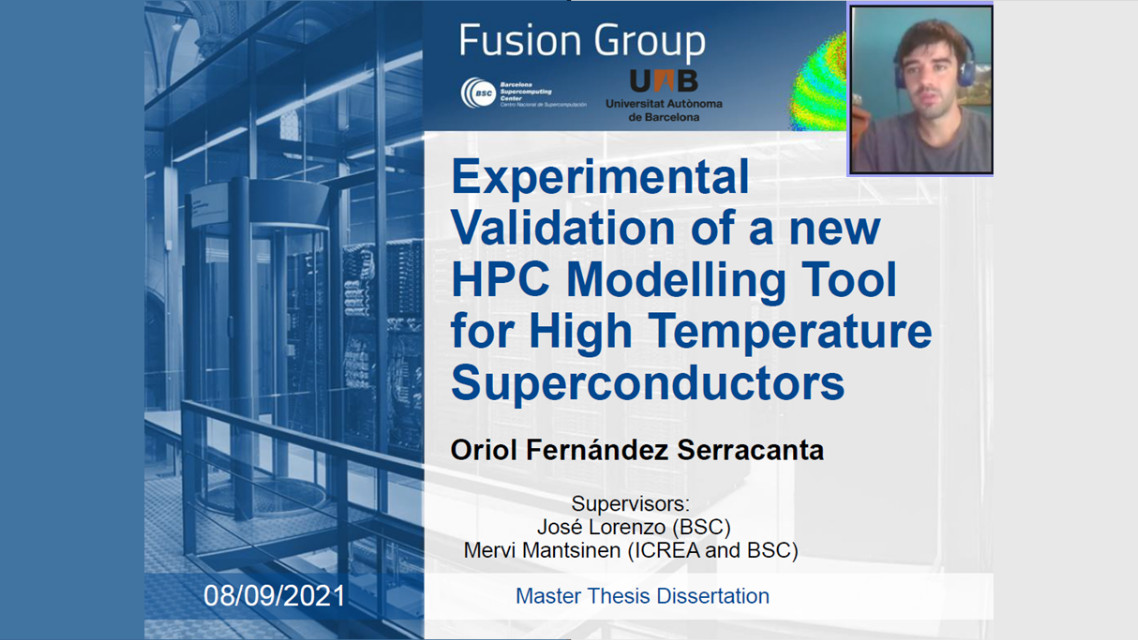
As in its previous editions, our Fusion Group is contributing several lectures to the fusion course imparted within the Nuclear Engineering MSc at UPC. The course gives an overview of plasma physics and fusion technology, presenting a broad scope of topics. The topics are taught by experts in each of the fusion fields covered, with external lecturers mainly provided by Fusion for Energy (F4E) and our Fusion Group at BSC.
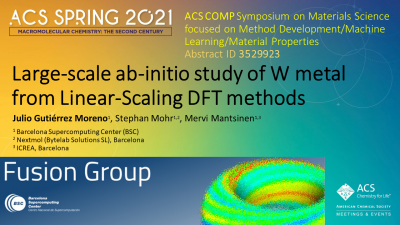
The BSC Fusion Group’s researcher Dr Julio Gutiérrez presented our recent progress on the FusionCAT project work on “Large-scale ab-initio study of tungsten metal from linear-scaling density functional theory methods” at the American Chemical Society’s (ACS) Division Computers in Chemistry (COMP) Symposium on Materials Science focused on Method Development/Machine Learning/Material Properties (Paper ID 3529923). The presentation took place on April 5 and it is available on-demand between April 19-30 on the conference web platform.
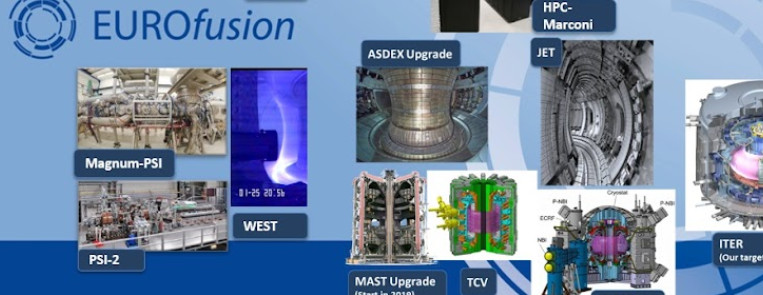
EUROfusion has organized a series of monthly webinars to address several GPU topics to help the fusion community to use this architecture on new supercomputers. The webinars consist of talks from programing paradigms to the developers’ experience, vendors’ technical talks, etc.
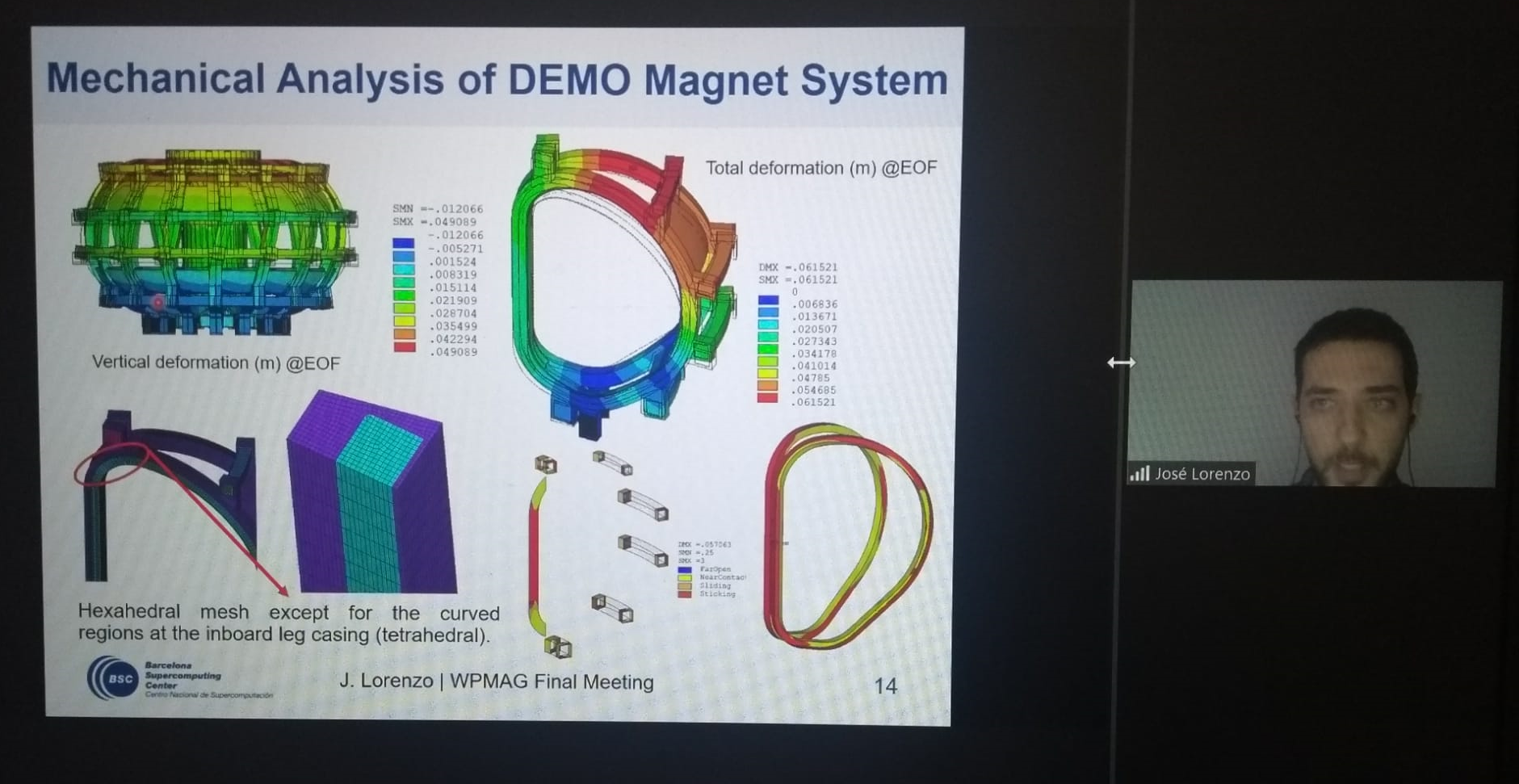
This week, from 14th to 16th December 2020, our team member José Lorenzo participated in the EUROfusion Work Package Magnets (WPMAG) Annual Meeting that took place virtually due to the travel restrictions associated to the covid-19 pandemics.
Figure 1. Launch of the 1st Spanish Fusion HPC Workshop
On November 27th, the 1st Spanish Fusion HPC Workshop (link to full programme and abstracts) was organized online by our Fusion group and Barcelona Supercomputing Center (BSC) in close collaboration with the Spanish Supercomputing Network(RES) and experts from several collaborator institutes. A total of 182 registered attendants interested in the modelling in fusion met in this online event which delved both into the overall progress and challenges of High Performing Computing (HPC) applied to large scale fusion projects such as ITER or EUROfusion, and into specific research on most types of fusion phenomena simulations (energy and particle transport, fast particles, multi-physics, plasma, deep learning, materials micro-structure, preconditioning, HPC systems resources and transferability across HPC systems, etc.).