Developing a deterministic neutron transport solver – FusionCAT Task

FusionCAT is an initiative coordinated by the Barcelona Supercomputing Center – Centro Nacional de Supercomputación (BSC) in which seven Catalan institutions team up and collaborate in the field of research and development of fusion energy technology. The main goal is to develop state-of-the-art tools to simulate coupled physics phenomena that take place in fusion reactors leveraging the advantages of high-performance computing clusters.

Future energy production fusion reactors such as DEMO are based on the massive production of plasma neutrons. This includes their impact and effects on breeding blankets to multiply neutron output and sustain the fuel cycle. To achieve efficient energy production, the fuel cycle must be understood and optimized, which is why the second project within FusionCAT, labelled “Neutronics, tritium breeding and operational fuel cycle”, is oriented towards the analysis of the interaction between neutrons and reactor components. In this project, the first task involves the development of a high-fidelity deterministic neutron transport solver called NEUTRO.

Read more

PhD thesis on runaway-electron model development and validation in tokamaks

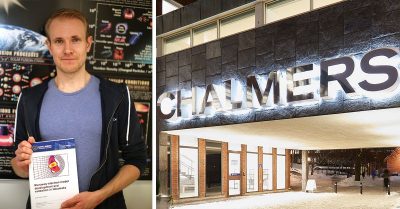
Dr Mathias Hoppe with his PhD thesis at Chalmers University of Technology, Gothenburg, Sweden. Credit: Department of Physics, Chalmers University of Technology, 2022.

On January 14, our group leader Prof. Mervi Mantsinen had the honour of chairing the evaluation panel of Mathias Hoppe’s thesis entitled “Runaway-electron model development and validation in tokamaks” at the Chalmers University of Technology, Gothenburg, Sweden.

Super fast electrons, so called “runaway electrons”, can sometimes appear in fusion devices and can cause severe damage to the device wall. To develop technologies to prevent the generation of runaway electrons, advanced computer models accounting for all the relevant physics mechanisms playing a role in a fusion device are required, which constitutes the first part of Mathias Hoppe’s thesis. To ensure that the models are correct they must also be tested on the fusion experiments of today, which can be done using synchrotron radiation and the techniques developed in the second part of Mathias Hoppe’s thesis.

Read more

Our EUROfusion Engineering Grantee wins Outstanding Presentation Award at MT27

The 27th International Conference on Magnet Technology (MT27) was held at Fukuoka International Congress Center, Fukuoka, Japan and online from November 15 to 19, 2021.

Our colleague José Lorenzo participated in the conference and presented a poster entitled “Homogenization of Winding Pack Properties for the Structural Analysis of Fusion Magnets” on the work he developed in our group within his prestigious EUROfusion Engineering Grant (EEG).

Read more

Looking back to 2021 in our group

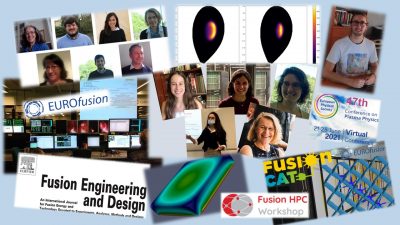
Collage of images from our most accessed posts and other highlights in 2021.

The year 2021 is coming to its end and it is time for us to take a small break to disconnect, rest and celebrate. We would like to thank all our followers for their continued interest in our work.

For us here at the BSC Fusion group it has been a good year despite being still affected by the COVID-19 pandemic in our daily lives, including our work.

Read more