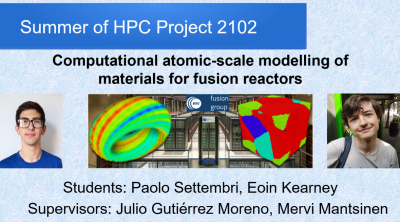
I am Donato Jiménez Benetó, an undergraduate student in mathematics and engineering physics. I took part in the BSC International Summer HPC Internship Programme during the summer of 2021 at the Fusion Group. Unfortunately, I had to work from home during the whole internship due to the COVID-19 situation, but, even so, I felt very welcome and well cared for by the group from the first day.
We were supervised by Julio Gutiérrez Moreno and the group leader Mervi Mantsinen. They were a great help and really supportive throughout our project. As the project was online due to the pandemic it would have been easy to become disconnected, but they helped us feel welcome in the group. Being part of group meetings also helped us feel part of everything.
Now below we’ll give you an introduction to our projects and how the summer went.
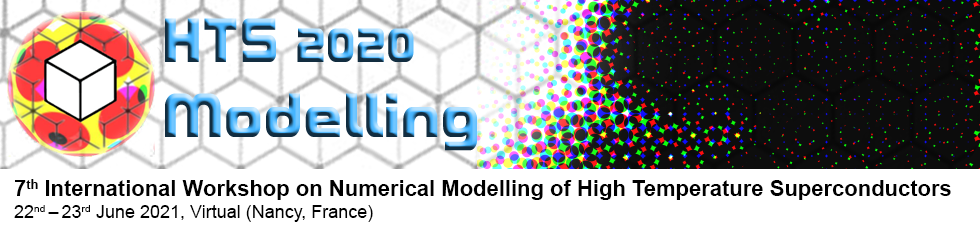
Our team members Oriol Fernández and José Lorenzo attended the 7th International Workshop on Numerical Modelling of High-Temperature Superconductors from 22nd to 23rd June. The event was planned to be held in Nancy, France, in 2020 but due to the current pandemic situation it had to be postponed and finally took place remotely in 2021.
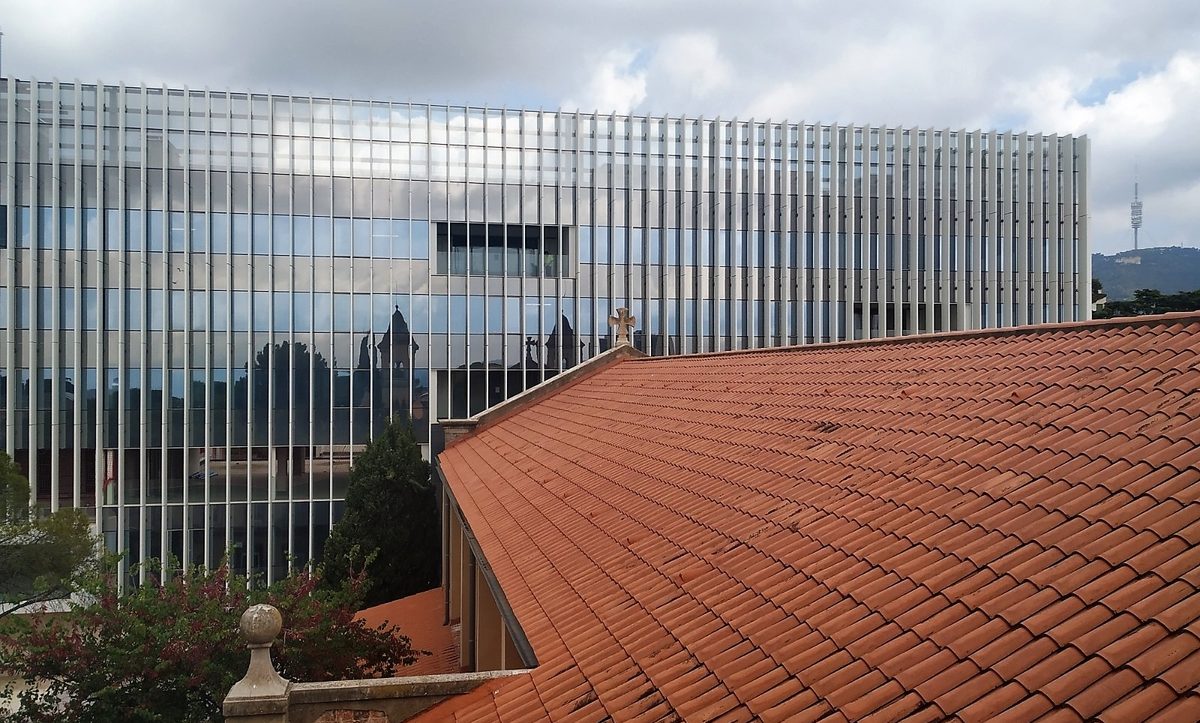
The BSC Advancing Computing Hub will be located in the new BSC building at Barcelona.
The EUROfusion consortium will invest a total of € 59.8 million in nineteen research projects in their Work Plan 2021-2025 to strengthen understanding and predicting of fusion processes in the European fusion programme. One of these projects will benefit from the expertise at Barcelona Supercomputing Center (BSC) to improve the computational conditions for fusion energy.
Prior to this EUROfusion investment, BSC already holds two reference HPC performance groups in Europe, i.e. the PRACE High-Level Support Team (HLST) and the Performance Optimisation and Productivity Centre of Excellence (POP CoE). The new EUROfusion Advanced Computing Hub (ACH) will become the third one. The PRACE HLST, POP CoE and BSC Fusion group members played a key role in building the winning proposal, thus making BSC one of the three reference European teams in HPC performance for fusion. The BSC ACH will include 8 full-time team members with secured funds until 2025.
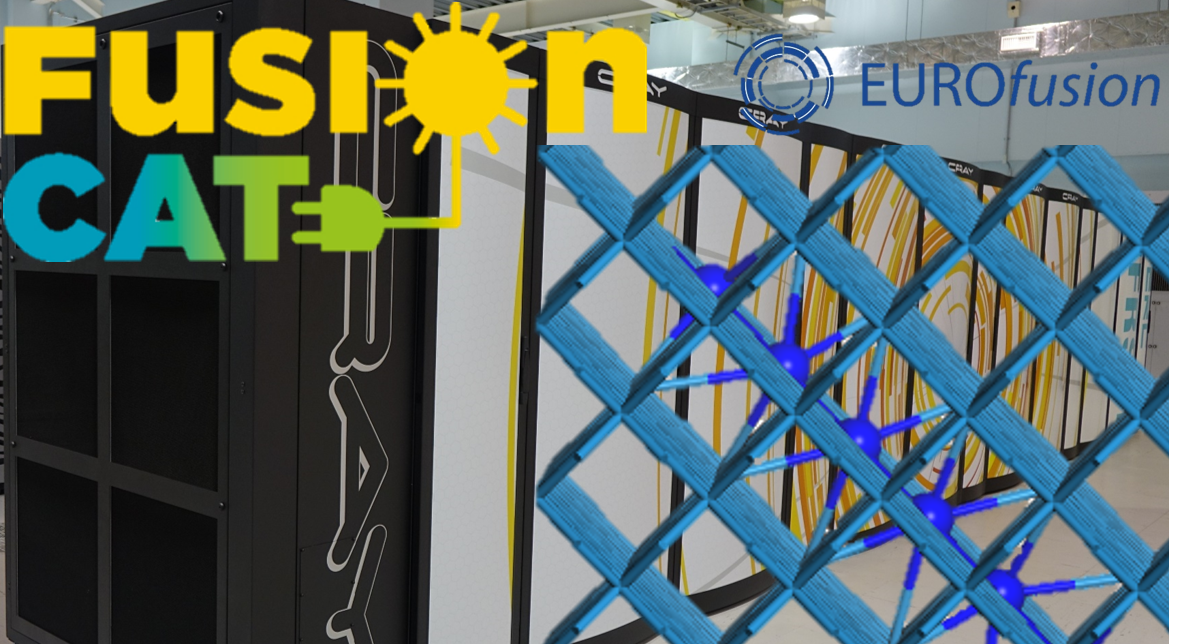
Atomistic structure of self-interstitial defect in bulk tungsten. Background image from JFRS-1 supercomputer, adapted from source (www.iferc.org)
We are glad to announce that a joint EU-Japan HPC project led by the BSC Fusion Group’s researcher Julio Gutiérrez has been recently granted 350K node-h (14,000,000 core-h). The project will run over one year on the Japan Fusion Reactor Simulator (JFRS-1), located at the Computational Simulation Centre of the International Fusion Energy Research Centre (IFERC-CSC) in Rokkasho (Aomori, Japan).
As in its previous editions, our Fusion Group is contributing several lectures to the fusion course imparted within the Nuclear Engineering MSc at UPC. The course gives an overview of plasma physics and fusion technology, presenting a broad scope of topics. The topics are taught by experts in each of the fusion fields covered, with external lecturers mainly provided by Fusion for Energy (F4E) and our Fusion Group at BSC.