Our newest contribution to the journal of Fusion Engineering and Design

The final goal of fusion power plants is to produce electricity in the grid. This is planned to be done by heating up water as with fission power plants or thermal power stations. In the case of magnetically confined fusion, neutrons released from the hot fusion plasma escape the magnetic confinement and finish in the wall heating up water. In the case of DEMO (DEMOnstration power plant), the neutron production will be large and the reactor materials have to be neutron-resistant. Thereby, neutronics becomes an increasingly important field of study.

Our recent paper published in the journal of Fusion and Engineering Design entitled Validations of the radiation transport module NEUTRO: a deterministic solver for the neutron transport equation reports on our on-going efforts in this field, carried out in collaboration with the CNEA-CONICET in Buenos Aires (Argentina). It can be accessed for free via this link during the first 50 days after the publication.

Read more

Our recent collaboration selected as featured paper in Physics of Plasmas

Since the theoretical description of the three-ion scheme back in 2015 [1], the scheme has been tested and proven in several fusion devices such as Alcator C-Mod, JET and AUG. The main idea underlying this radiofrequency (RF) scheme comes from the polarization of the wave. In essence, what is sought, is the maximization of the electric field component that rotates as the ions do around the magnetic field. This condition is typically reached when the resonance location of the minority ion species coincides with the so-called L-cutoff of the wave. The result? A highly dominant ion absorption of the wave and a very energetic ion distribution.

We are very happy to announce that the recently published paper Physics and applications of three-ion ICRF scenarios for fusion research has been selected as a featured paper in the prestigious Physics of Plasmas journal, where two members of our group, Mervi Mantsinen and Dani Gallart, have collaborated. The paper presents many of the advances on this scheme during these last years, especially from the experimental point of view and the developed theoretical framework.

Read more

Join us for PRACE Summer of HPC 2021 on computational atomic-scale modelling of materials for fusion

Are you interested in collaborating with our Fusion group at Barcelona Supercomputing Center (BSC) during July and August 2021? PRACE Summer of HPC 2021 is now open for applications to late-stage undergraduate and Master’s students. The deadline for applications is March 15, 2021.

In this edition, BSC offers six projects to join. One of them is in our Fusion Group under the supervision of Dr Julio Gutiérrez and our group leader Prof. Dr Mervi Mantsinen.

The project is on computational atomic-scale modelling of materials for fusion reactors and it contributes to the efforts to mitigate climate change which is one of the most important humankind challenges at the time.

Read more

Our group leader’s reflections to mark the International Day of Women and Girls in Science

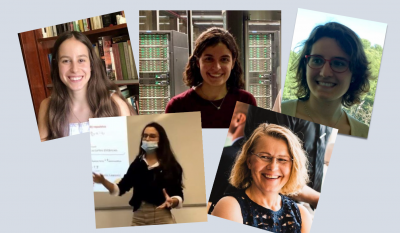
From left to right, top: Lara San Martin, Marta Florido, Alba Gordó. From left to right, bottom: Ruth Mora Soto and Mervi Mantsinen

Our Fusion group is hosted by Barcelona Supercomputing Center (BSC), which is one of the many research centers in Spain and worldwide that still have steps to take to reach gender equality.

Despite the recent progress there is still a great deal to do in this area given the fact that only about 25% of the BSC workforce is female and among the research groups only about 20% are led by female scientist. Moreover, none of the nine directors of the center is a woman, while the situation with the Governance Boards has improved slightly over the past years, with 18% and 27% of women currently in the Board of Trustees and Executive Committee and the Scientific Advisor Board, respectively. Our gender and diversity plan to improve this situation is available here.

Our Fusion group is one of the few groups at BSC led by a woman researcher, i.e. myself ICREA Research Prof. Dr Mervi Mantsinen.

Read more

Impressions from the Virtual School on Numerical Methods for Parallel CFD 2020

Lecture by prof. Alfredo Soldati in the 2020 Virtual School on Numerical Methods for Parallel CFD

In December 2020, CINECA‘s School on Numerical Methods for Computational Fluids Dynamics (CFD) moved online for the first time due to the ongoing COVID-19 pandemia. This annual PRACE training event gathered top international researchers who presented state-of-the-art fluid simulation models and conducted several practical sessions using specialized parallel codes in Marconi100 and Galileo supercomputers.

Read more

Our contributions to the historic fusion experiments at Joint European Torus (JET)

View from the control room of the JET tokamak during an experiment (picture from the pre-covid era)

The fusion community is living interesting times as the Deuterium-Tritium (D-T) campaign at the Joint European Torus (JET, UK) approaches. This is the type of plasma with the greatest fusion cross section and, therefore, the one with the highest chances of providing commercial fusion energy. This campaign will serve as a testbed for ITER‘s future experiments, the experimental fusion reactor that should provide 10 times the energy which is actually used to operate the machine. 

One of the main focus of study for the fusion community is the so-called isotope effect. This is the impact that different atomic masses of the hydrogen (H) isotope, D and T, have on the plasma behaviour, or more precisely, on its confinement.  At the moment, such valuable experiments can only be done at JET. There is a big international team conducting these experiments, however, we would like to emphasize in this post the role of some of the Spanish scientists involved in these experiments and, in particular, the role of our Fusion Group members, Mervi Mantsinen and Dani Gallart. The role of these scientists is different in each case, nevertheless, the final goal is always the same, make fusion energy a reality some day.

Read more