Collaborating with CIEMAT and Aalto University on modelling of fast ions in TJ-II stellarator

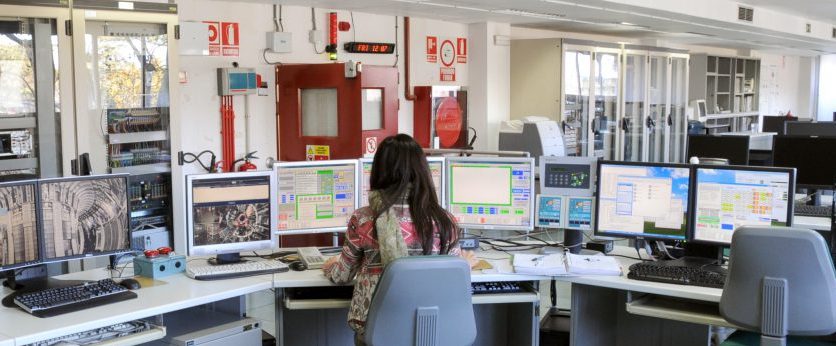
TJ-II stellarator control room (Photo: CIEMAT)

The Fusion Group at Barcelona Supercomputing Center (BSC) and the National Fusion Laboratory at CIEMAT (Centro de Investigaciones Energéticas, Medioambientales y Tecnológicas) have actively collaborated for more than ten years. Over the recent years, the collaboration has focused on the modelling of plasma instabilities in the CIEMAT-based TJ-II stellarator device.  It has recently resulted in a publication in the Nuclear Fusion journal and a related follow-up project on the modelling of energetic particle behaviour in TJ-II plasmas.
Read more

Our new journal paper in Nuclear Fusion

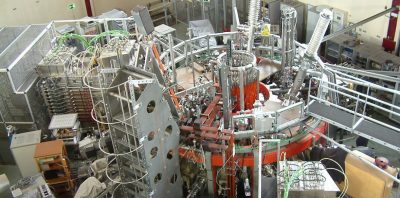
TJ-II stellarator at the Laboratorio Nacional de Fusión (LNF), CIEMAT, Madrid, Spain (Foto: http://www.fusion.ciemat.es)

Our journal article entitled “Modelling of beam-driven Alfvén modes in TJ-II plasmas” has been accepted for publication in Nuclear Fusion. Nuclear Fusion is one of the renowned journals in our field.

The paper reports on our modelling results aimed at understanding a certain type of energetic-particle-driven instabilities called Alfvén modes in TJ-II stellarator plasmas and their comparisons with experimental results. In particular, we have modelled Alfvén eigenmodes in TJ-II discharges with a dynamically changing magnetic configuration when both steady and chirping modes are observed. The modelled mode frequencies and radial locations are found to be consistent with the experimental findings. We also have drawn important conclusions on the properties of the energetic particles that are resonant with the modes.

The journal article can be found via this link.

Read more

Stunning simulation of a fusion reactor in operation

Simulation of JET with glass walls in operation (Photo: CCFE)

Culham Centre for Fusion Energy (CCFE) is developing a new simulation tool knwon as CHERAB for forward modelling diagnostics based on spectroscopic plasma emission.

CHERAB is being used by fusion scientists to simulate all sorts of visible and infrared plasma measuring tools, known as diagnostics. The diagnostic systems measure the light output of the plasma to study properties such as its temperature and density. Inferring these properties requires an accurate understanding of how the light is produced and bounces around inside the machine. The more accurately we can model these systems the more accurate our measurements of fusion plasmas will be.

Read more

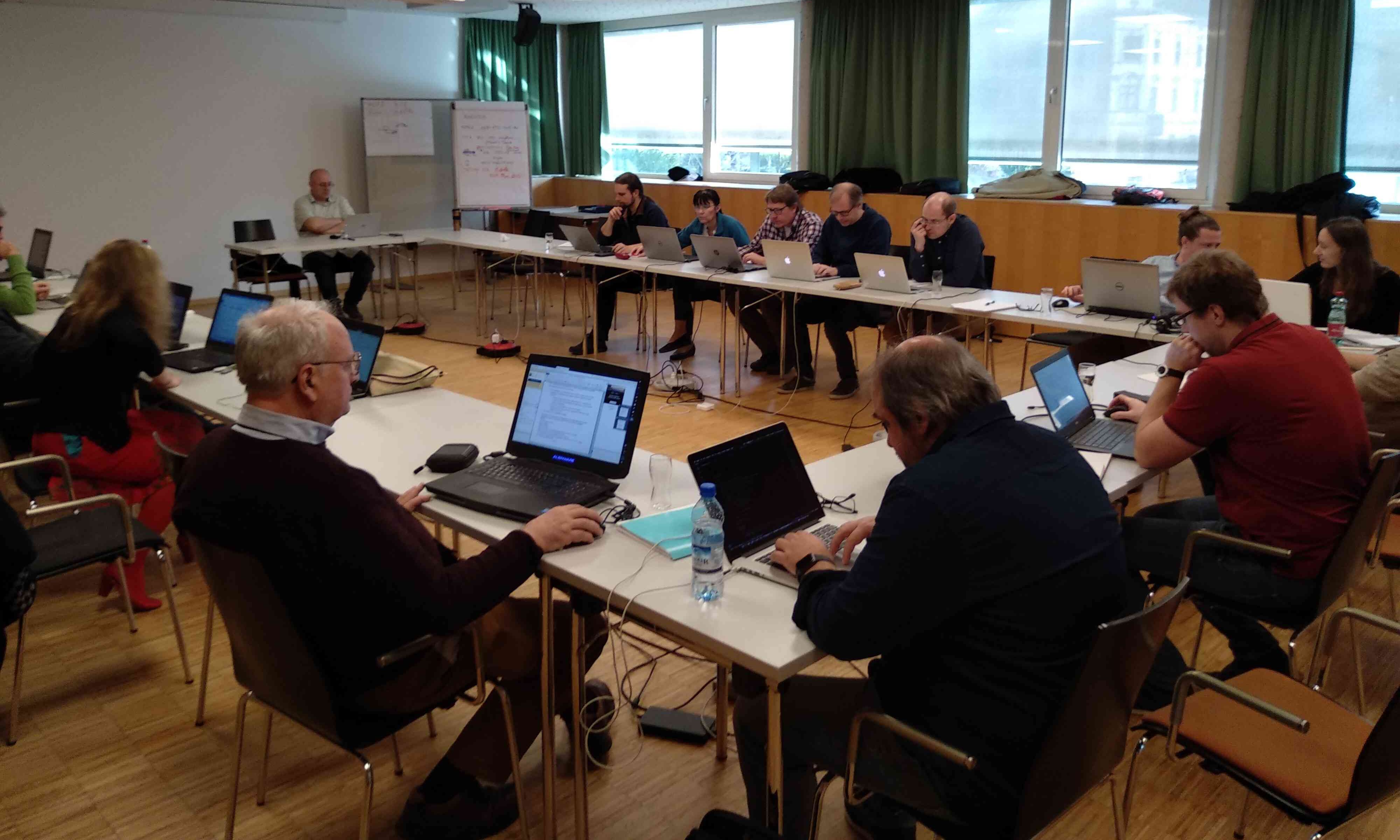
WPCD Code Camp at Innsbruck with Gloria Falchetto

This week, WPCD developers from all around EUROfusion countries have met at Innsbruck, Austria, in the last WPCD code camp of 2018. 37 participants have been working on various activities, all of them aligned towards the European integrated modelling efforts. Discussions have been carried out in the integration of codes within the IMAS (Integrated Modelling & Analysis Suite) ant ITM aiming to bring together codes from fusion research centers.

Read more