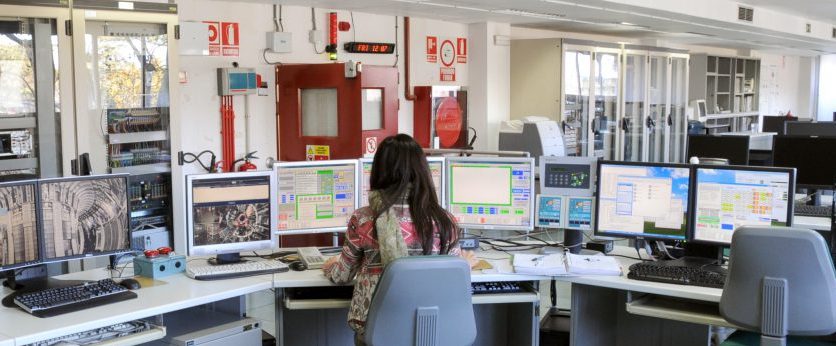
The Fusion Group at Barcelona Supercomputing Center (BSC) and the National Fusion Laboratory at CIEMAT (Centro de Investigaciones Energéticas, Medioambientales y Tecnológicas) have actively collaborated for more than ten years. Over the recent years, the collaboration has focused on the modelling of plasma instabilities in the CIEMAT-based TJ-II stellarator device. It has recently resulted in a publication in the Nuclear Fusion journal and a related follow-up project on the modelling of energetic particle behaviour in TJ-II plasmas.
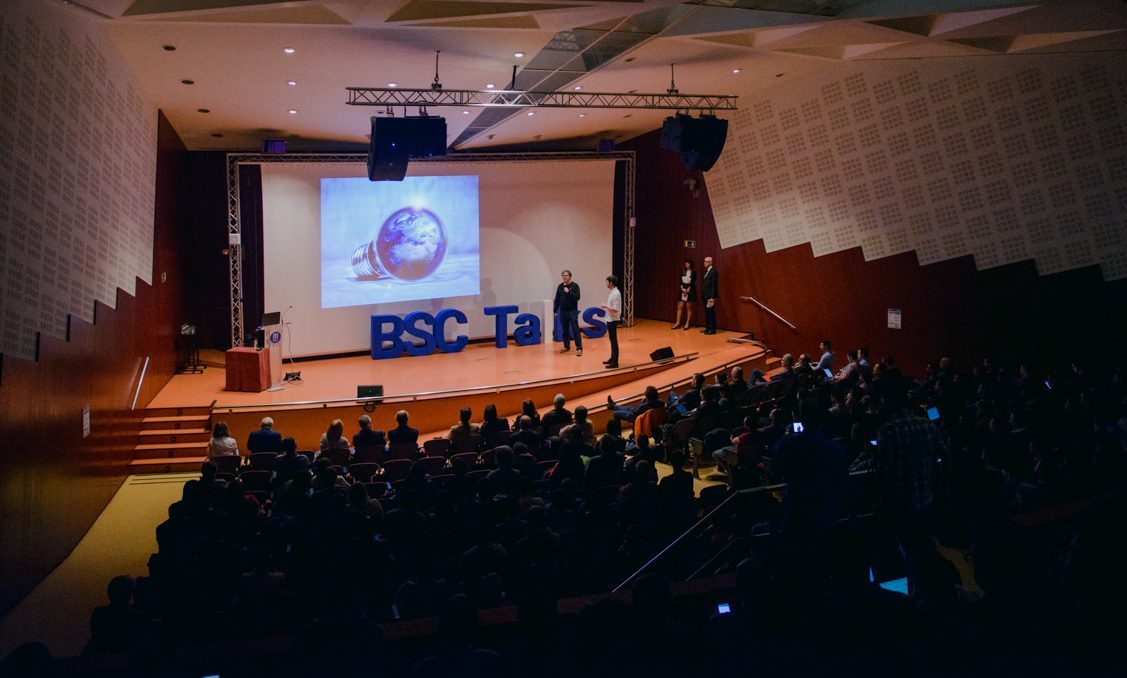
On 20 January, Barcelona Supercomputing Center held the 2018 Annual Meeting in the UPC Vèrtex building Auditori (auditorium). In this event, Mateo Valero, BSC director, and Josep Martorell, BSC associate director, reviewed the achievements reached in 2018 and the expected projects in the future.
Simulation of JET with glass walls in operation (Photo: CCFE)
Culham Centre for Fusion Energy (CCFE) is developing a new simulation tool knwon as CHERAB for forward modelling diagnostics based on spectroscopic plasma emission.
CHERAB is being used by fusion scientists to simulate all sorts of visible and infrared plasma measuring tools, known as diagnostics. The diagnostic systems measure the light output of the plasma to study properties such as its temperature and density. Inferring these properties requires an accurate understanding of how the light is produced and bounces around inside the machine. The more accurately we can model these systems the more accurate our measurements of fusion plasmas will be.
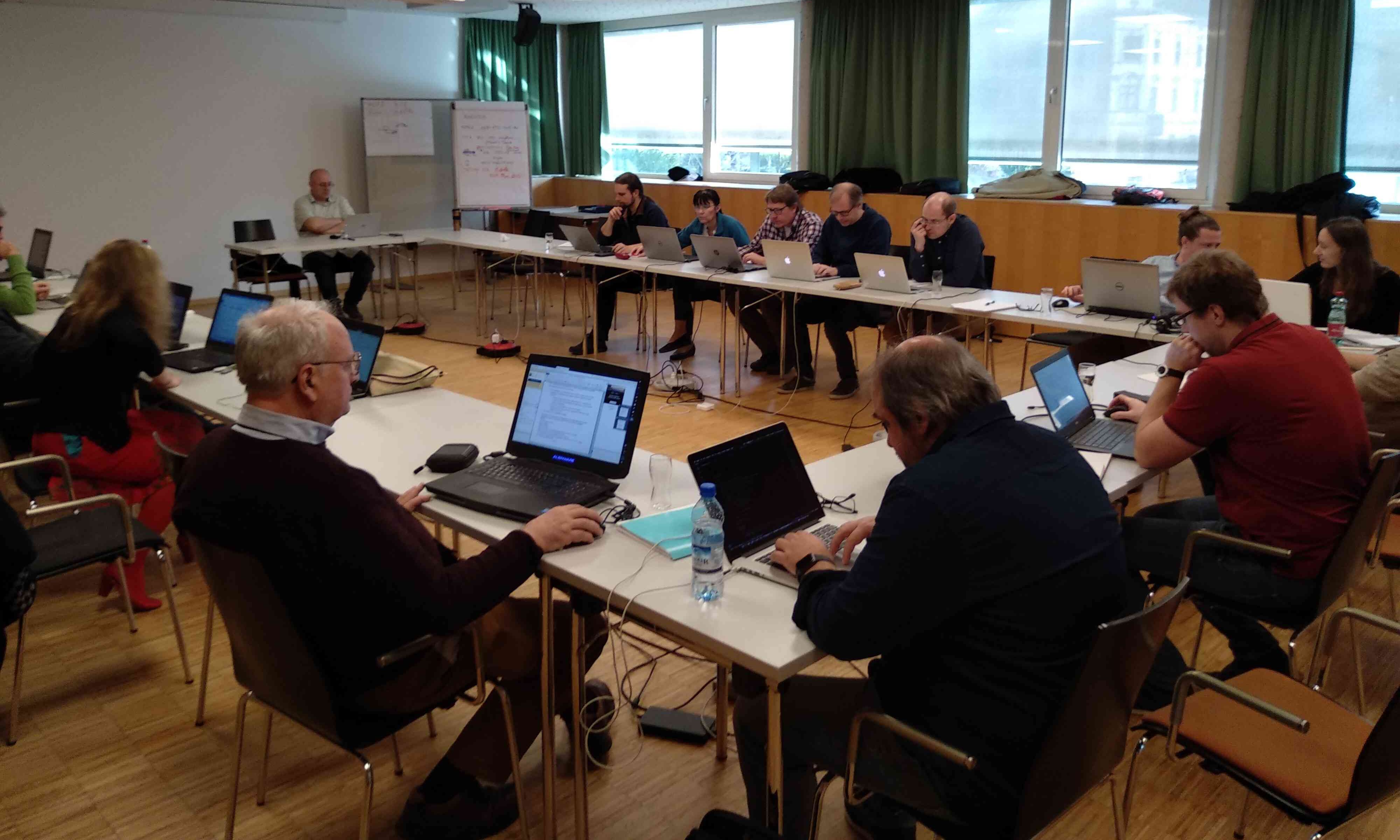
This week, WPCD developers from all around EUROfusion countries have met at Innsbruck, Austria, in the last WPCD code camp of 2018. 37 participants have been working on various activities, all of them aligned towards the European integrated modelling efforts. Discussions have been carried out in the integration of codes within the IMAS (Integrated Modelling & Analysis Suite) ant ITM aiming to bring together codes from fusion research centers.
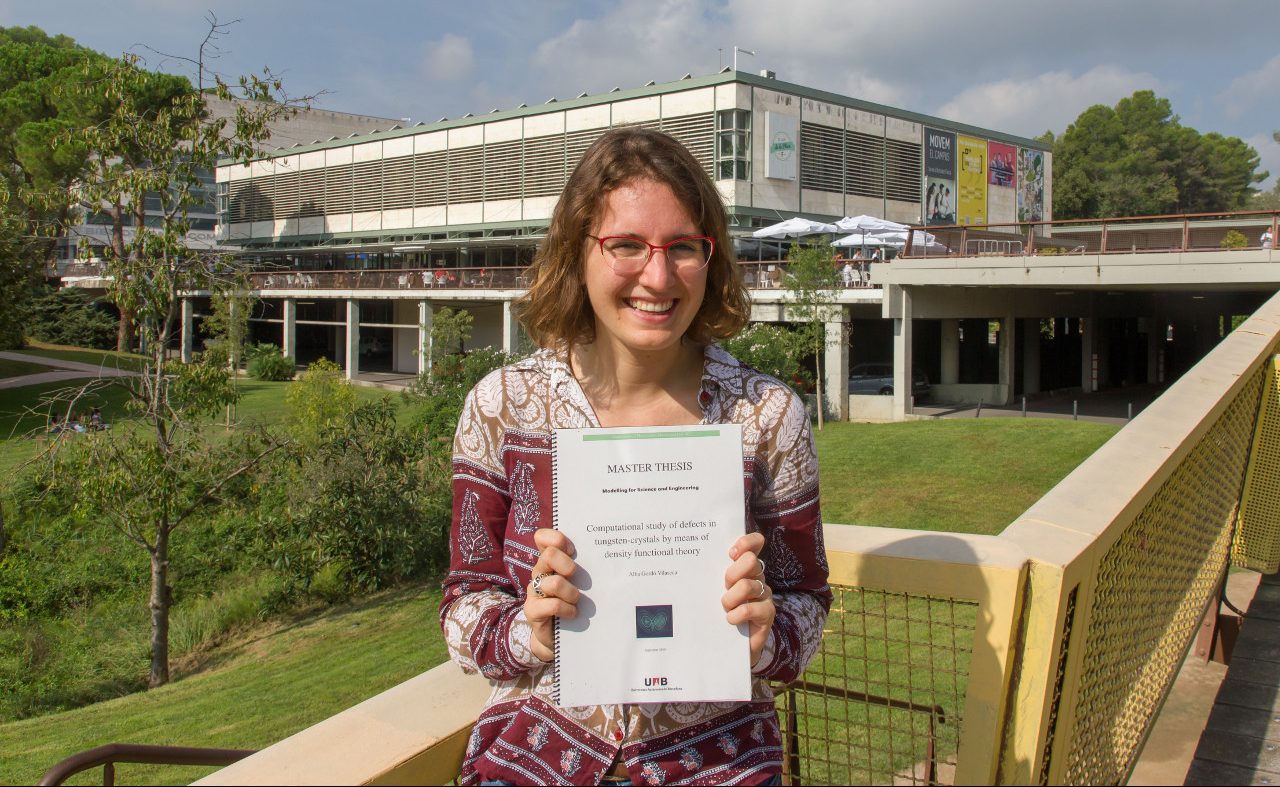
The work was based on the research she has been carrying out since last March in our group and in close collaboration with the Materials group at the CASE department at BSC, under the supervision of Dr. Stephan Mohr and Prof. Dr. Mervi Mantsinen. The defense took place at the Faculty of Sciences of Universitat Autònoma de Barcelona, Spain, and was graded with a top mark, proving the relevance and originality of it.
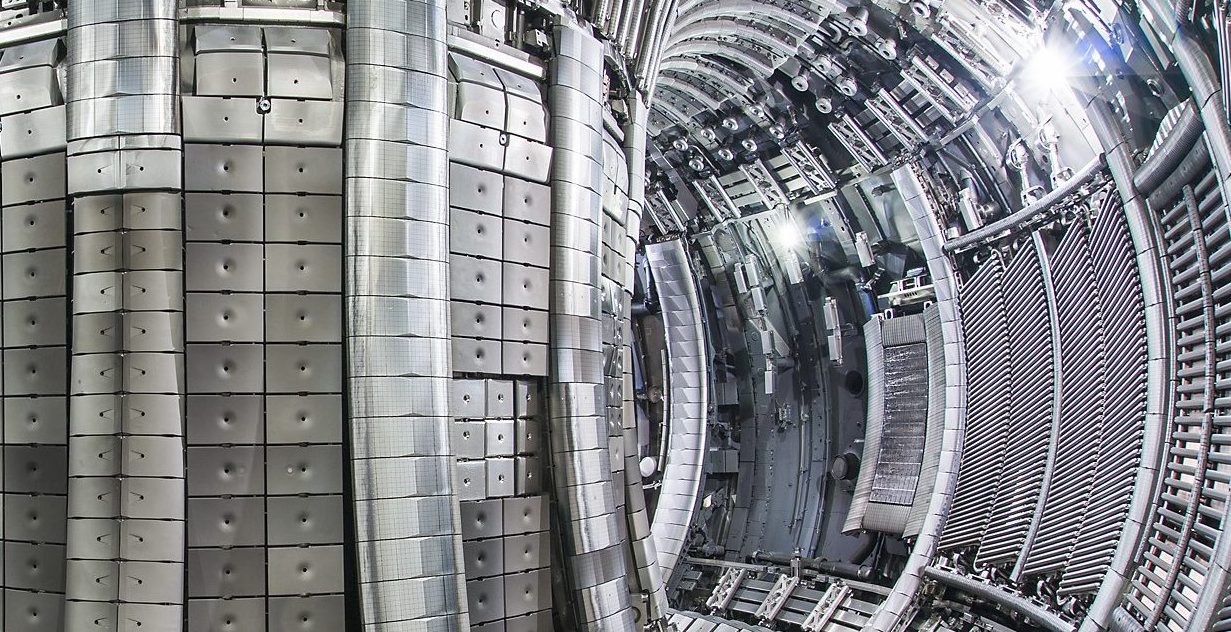
The Joint European Torus (JET) – Courtesy of EUROfusion
The paper entitled “Modelling of JET hybrid plasmas with emphasis on performance of combined ICRF and NBI heating” has been published by Nuclear Fusion. It advances our understanding of the optimisation of fusion performance of the recent Joint European Torus (JET) hybrid plasmas. The hybrid scenario is an advanced regime of tokamak plasma operation expected to be applied in ITER. It is characterized by a low plasma current Ip which allows operation at a high normalised beta as well as a safety factor at the plasma centre greater than 1 which is beneficial from the plasma stability point of view.
The paper focuses on the impact of neutral beam injection (NBI) and specially ion cyclotron resonance frequency (ICRF) heating on the neutron production rate. The main scheme studied is minority hydrogen (H) in a deuterium (D) plasma with D beams. The modelling takes into account the synergy between ICRF and NBI heating through the second harmonic cyclotron resonance of D beam ions which allows us to assess its impact on the neutron rate RNT. Apart from the D scenario, the deuterium-tritium (DT) scenario is also assessed through an extrapolation of D high-performance hybrid discharges. These results are relevant for the forthcoming DTE2 campaign at JET where one of the goals is to achieve the highest possible fusion performance for a duration of more than 5 s.