Welcome to MARCONI100, a new tool for fusion research

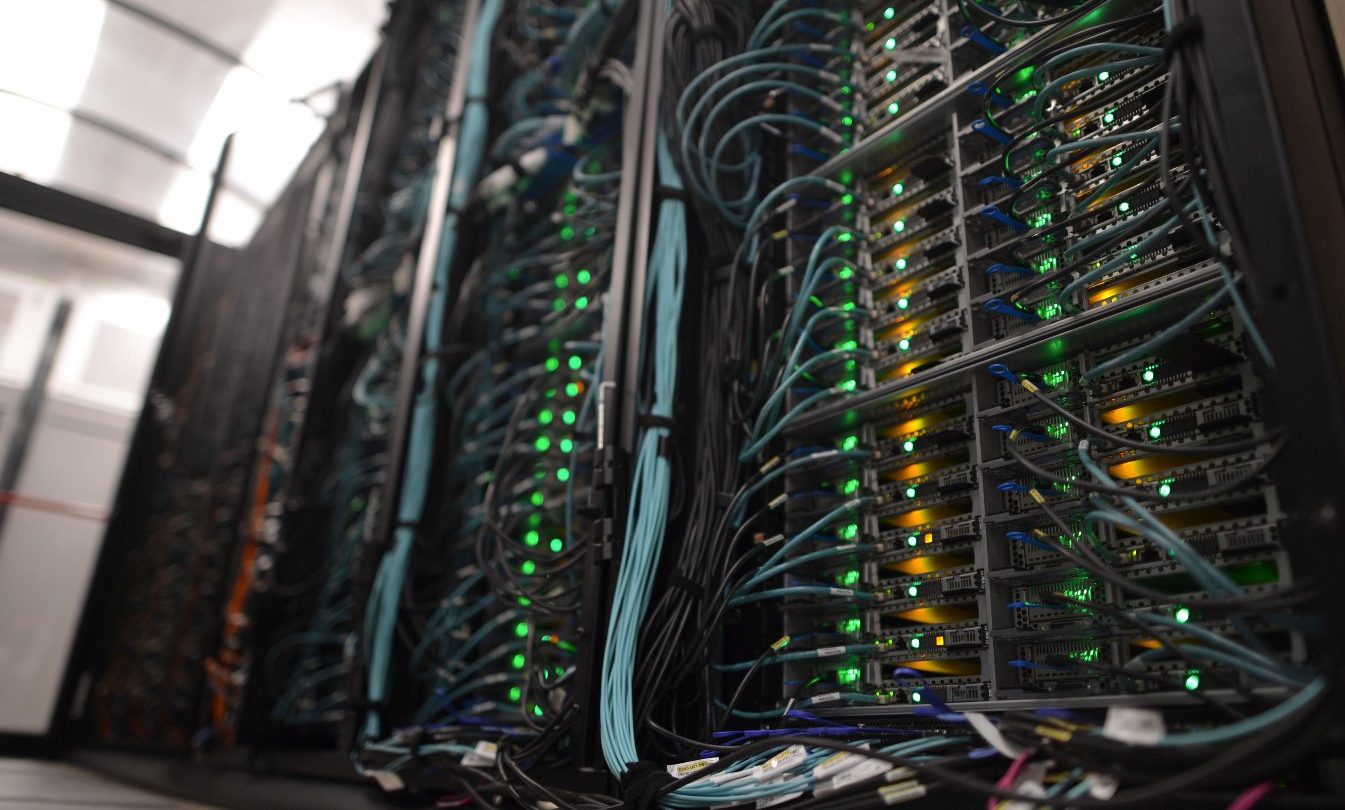
MARCONI 100 (Photo: CINECA)

MARCONI 100 (M100) is the new accelerated cluster acquired by CINECA, Italy, within PPI4HPC European initiative. MI100 is based on the IBM Power9 architecture with NVIDIA Volta GPUs and has a peak performance of 32 Pflops.

M100 became available in May 2020 to the European public and industrial researchers. In particular, the access to M100 is granted to users with approved projects for this platform (EUROfusion, PRACE, European HPC programs,…). EUROfusion community has 80 dedicated nodes of M100, which means a peak performance of 2.5 Pflops, to run fusion codes and boost the research in this field.

M100 opens the way to the pre-exascale Leonardo Supercomputer expected to be installed in 2021.

Read more

Major milestone reached with the fusion megaproject

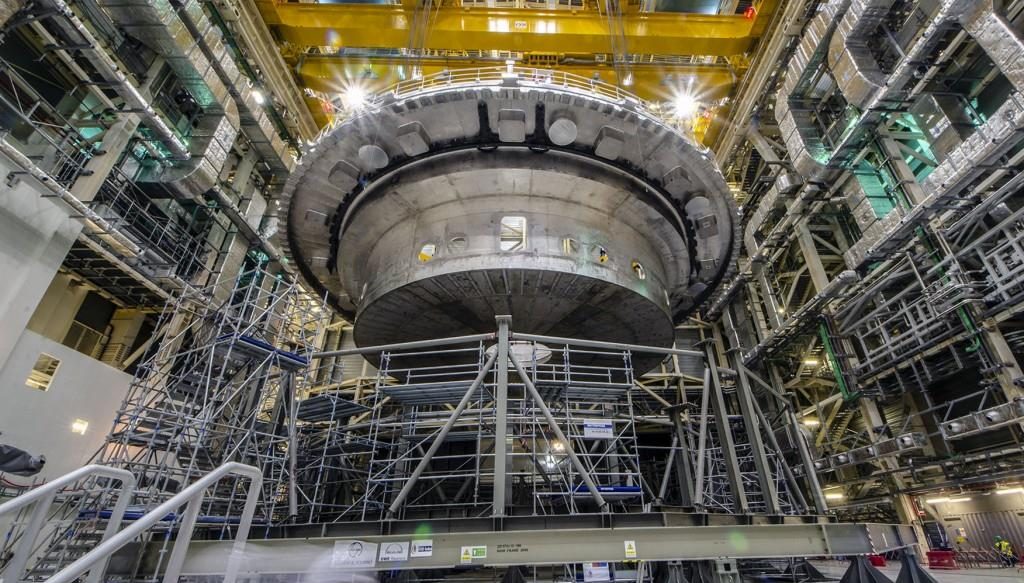
Source: ITER.

On May 26, the base of the ITER cryostat was successfully mounted onto its supporting structure in the Tokamak assembly pit. The 1250-tonne component was lifted from it’s mounting frame, carried across the Assembly hall and finally lowered into the pit, culminating a ten-year process to design, manufacture, deliver, assemble and weld one of the most crucial components of the ITER machine.

The International Thermonuclear Experimental Reactor (ITER) is the most ambitious energy project in the world, bringing together 35 different countries in the effort of producing clean energy for the generations to come. It is designed to demonstrate the feasibility of confinement nuclear fusion and develop the science and technology needed for a future nuclear power plant. After years and years of preparation, the international project officially started in 2007 and has since been building one of the most gargantuan research sites ever envisioned. According to the schedule, the first plasmas are expected in 2025.

Read more

Fusion experiments during the times of COVID-19

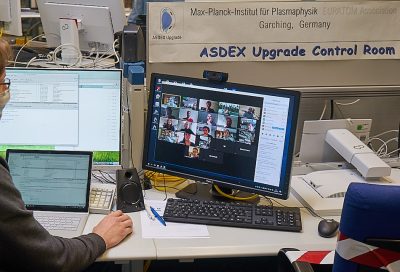
View from ASDEX Upgrade Control Room during Covid-19. Source: IPP, Volker Rohde

Our BSC Fusion Group works closely with various experimental fusion devices on the design, preparation, execution, analysis and modelling of new plasma experiments. We are particularly interested in validating and testing our modelling codes against experimental data, and in using our codes for the design of new experiments.

As experimental activities in many fields of science, fusion experiments have been strongly affected by the present COVID-19 outbreak.  

Read more

World’s largest superconducting tokamak is now fully assembled and ready for operation

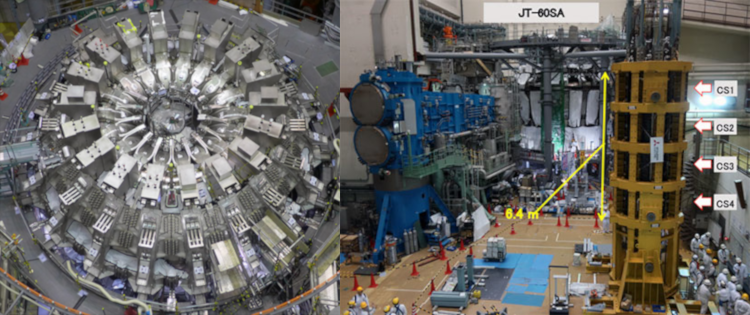
Left: Top view of JT-60SA during the assembly. Right: JT-60SA central solenoid in the assembly hall. Source: QST.

After more than 8 hectic years, the assembly of the JT-60SA fusion device is finally complete. This achievement is a major milestone that brings the world’s currently largest superconducting tokamak ready for operation.

Read more

How to reach high temperatures of around 150 million degrees Celsius needed for fusion?

On the 15th of April, our group leader Dr Mervi Mantsinen gave an online lecture entitled Ion Cyclotron Resonance Frequency (ICRF) Heating in Fusion Plasmas” as part of the Fusion Technology Course of the Nuclear Engineering Master organized by the Department of Physics on Barcelona School of Industrial Engineering (ETSEIB) at Universitat Politècnica de Catalunya (UPC), Barcelona, Spain.

This course offers the students an overview on selected key topics in Fusion Technology, delivered by specialist lecturers from F4E, UPC and our Fusion group at Barcelona Supercomputing Center (BSC). The course is coordinated at UPC by Dr Shimpei Futatani who moved from our Fusion group to UPC two years ago.

Read more

BSC research on COVID-19

The Barcelona Supercomputing Center’s (BSC) team is working from home to maintain the center’s research activity and the support for users of our supercomputing infrastructures. As an example, our fusion group continues working in the search of a clean energy using online meetings to coordinate and share the work.

The aim of this post is to discuss the numerous ways in which our center is devoted to the fight against coronavirus including new research projects that have been started related to it. Also, it will highlight external investigations aimed at fighting the pandemic which have been granted priority access to the MareNostrum 4 supercomputer and other BSC infrastructures.

Read more