
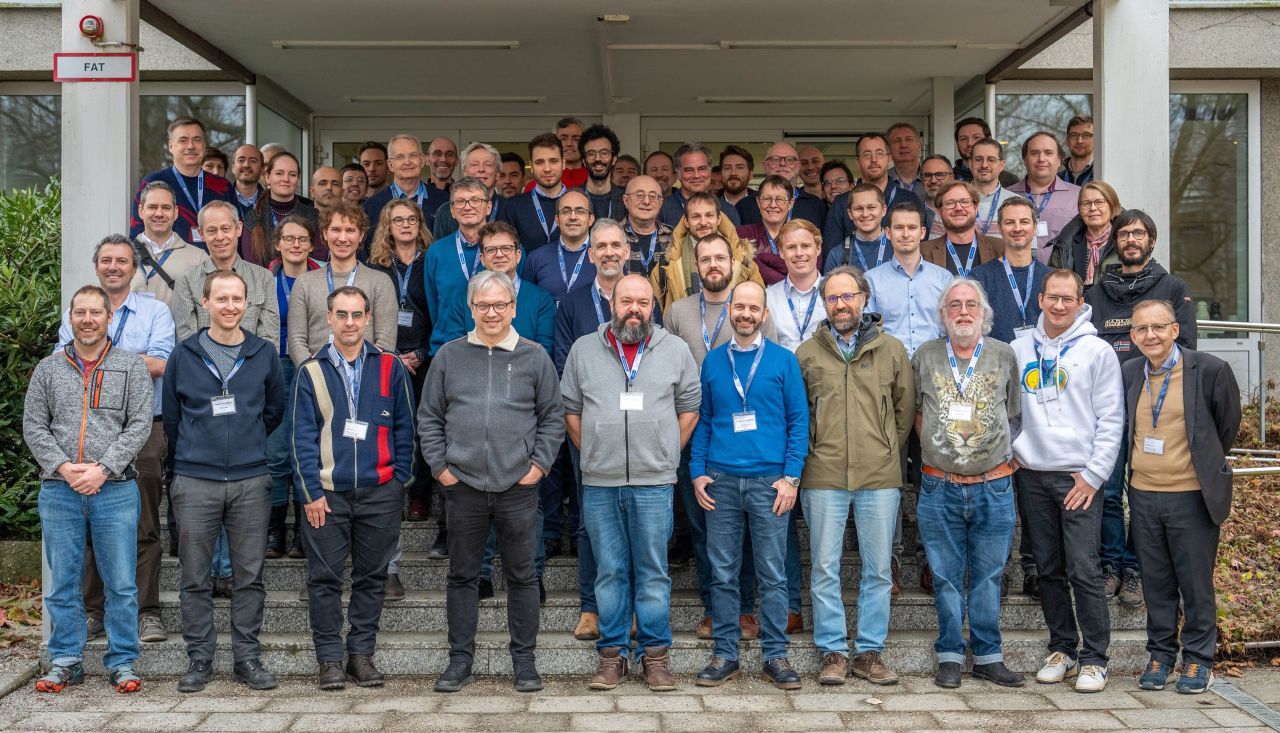
Between February 9th and 13th, 2026, the 2nd General Meeting of EUROfusion Theory and Advanced Simulation Coordination (E-TASC) was held at the Max Planck Institute for Plasma Physics (IPP) in Garching, Germany. The objective of the meeting was to collaboratively discuss the key points shaping both the present and the future of the E-TASC project. More than 100 participants from Europe and the US had the opportunity to gather and contribute to the topic. Several plenary sessions were organized to enable the interaction of participants with the EUROfusion project committee. Moreover, parallel and poster sessions were held to allow possible cross-interactions between the attendees.
The EUROfusion E-TASC is a big project which was launched in 2021 and is currently confirmed up to the end of 2027, where Theory, Simulation, Validation, and Verification (TSVV) groups of code nuclear fusion HPC code developers work together with HPC code specialists from Advanced Computing Hubs (ACHs), as one of the main activities.
The ACH at the Barcelona Supercomputing Center (BSC) was represented at the meeting by PI Mervi Mantsinen and Fusion Group members Alejandro Soba and Federico Cipolletta. They presented results from the BSC ACH with a poster prepared by Xavier Saez, and with parallel talks focusing on hands-on delivered by Joan Vinyals and Federico Cipolletta.
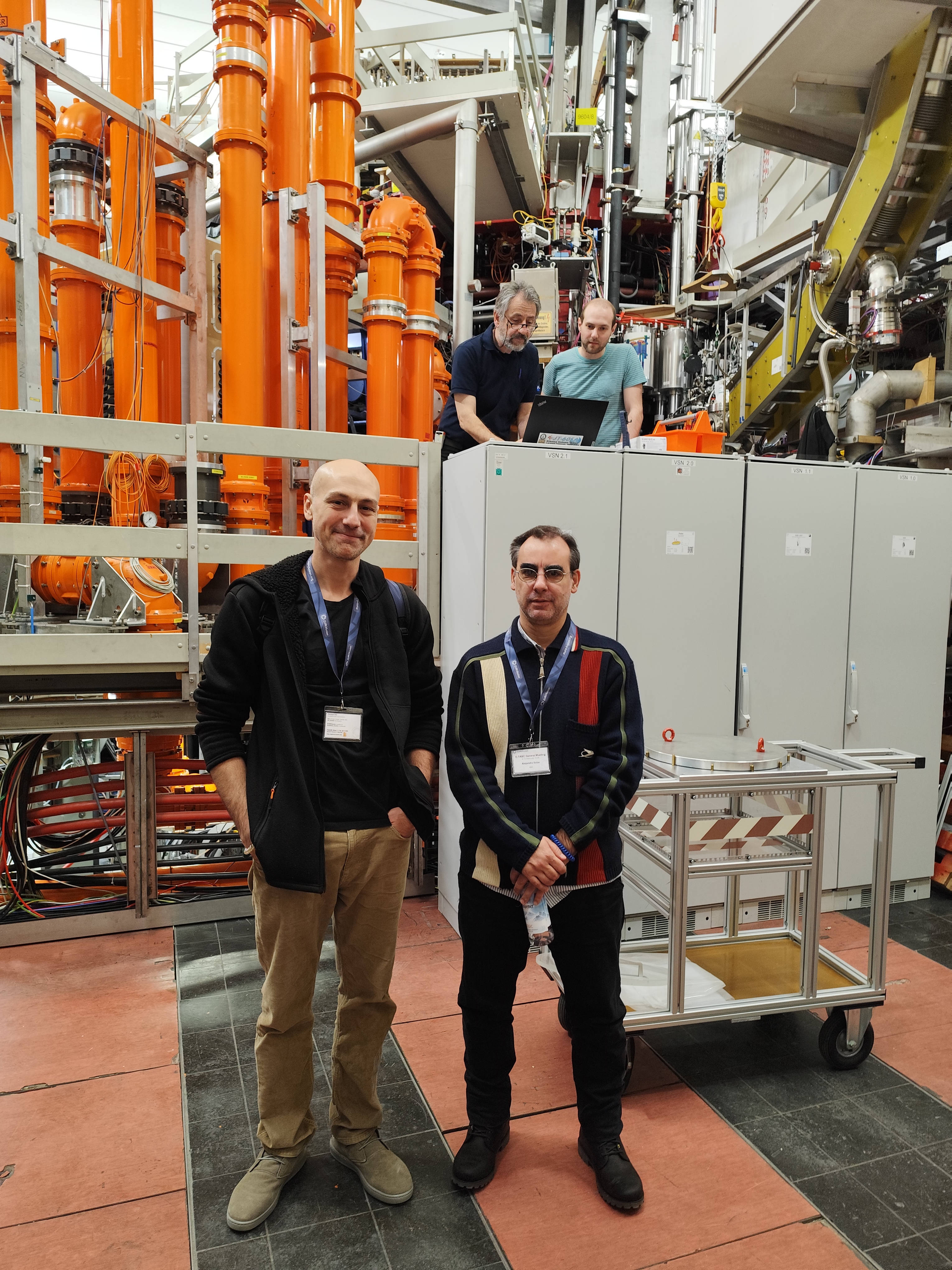
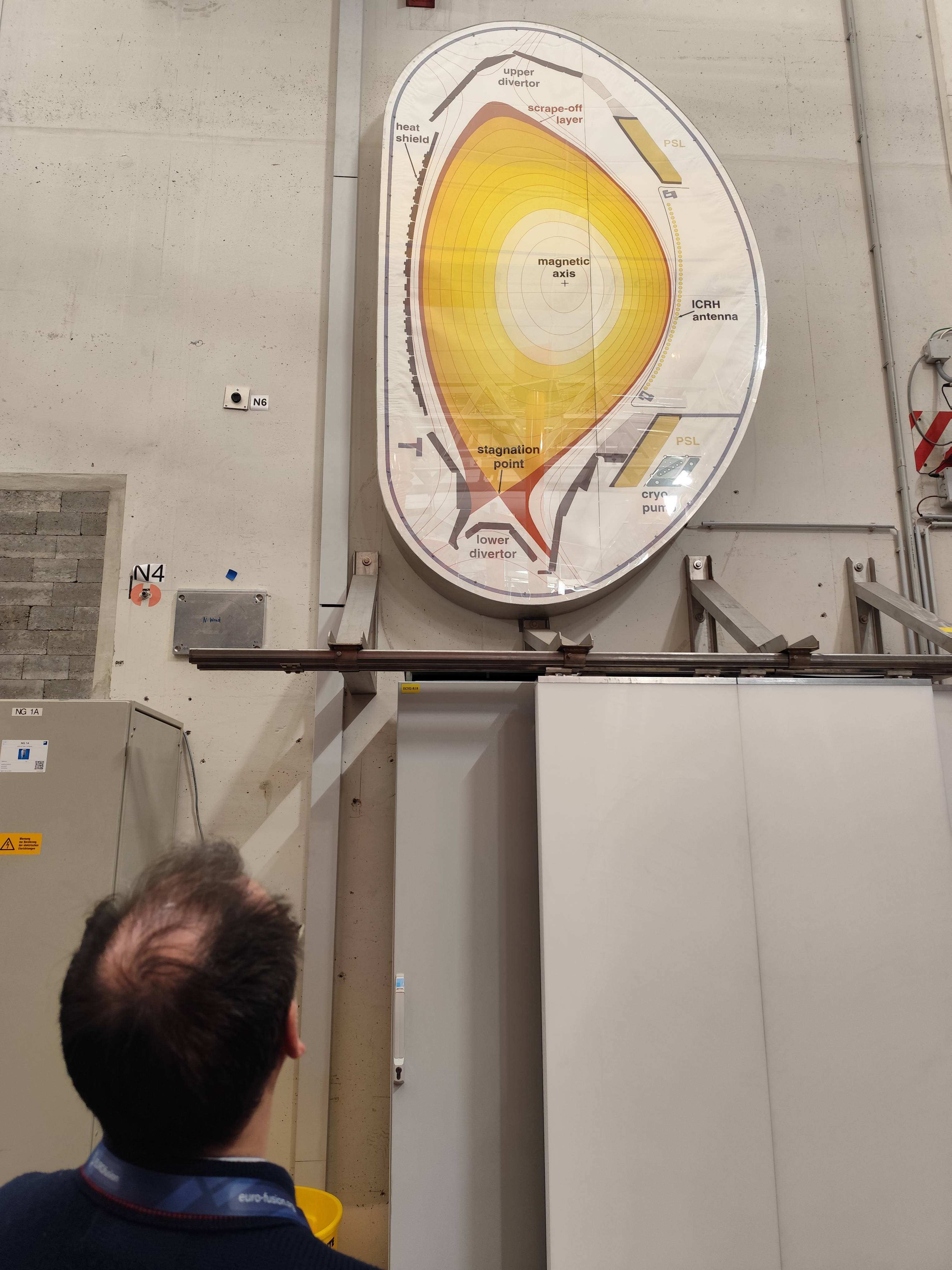
In addition, the Garching IPP ACH arranged an informal visit to the ASDEX Upgrade (AUG) tokamak, with participants from the BSC and EPFL ACHs. Opportunities to visit an operating experimental fusion device such as AUG are rare, and the experience provided valuable insight for computational scientists working closely with experimental data and physics modeling.
|
|
|
This year, participants from the newly established Digital Twin Environment (DTE), a recent addition to the E-TASC framework, were also invited to attend. Their participation provided an excellent opportunity to strengthen connections between the DTE, TSSV, and ACH research groups. Overall, the meeting proved highly productive, once again underscoring the strategic relevance of the E-TASC initiative and highlighting the complementary roles of TSSV groups in advancing scientific research, DTE groups in enabling application-driven developments, and ACH groups in identifying future directions in high-performance computing.