New fusion plasma duration world record

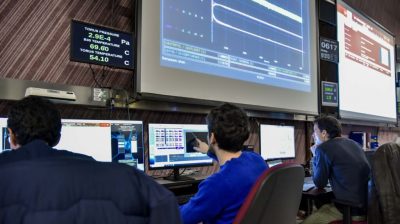
WEST Operations Room during the record (Photo: CEA)

On February 12, the French experimental reactor WEST (W-Tungsten Environment in Steady-State Tokamak), one of the EUROfusion consortium medium size Tokamak facilities, set a new world record by sustaining plasma stability for 1337 seconds—over 22 minutes. This milestone, announced by the French Atomic Energy Commission (CEA), marks a significant step because maintaining plasma stability for extended periods is one of the most significant obstacles in bringing fusion power to commercial viability.

This new record surpasses the previous benchmark set by China’s EAST (Experimental Advanced Superconducting Tokamak), which managed to sustain plasma for 1066 seconds on January 20. WEST’s world record has exceeded the recent achievement of the Chinese reactor by 25%.

Read more

32nd European Fusion Programme Workshop

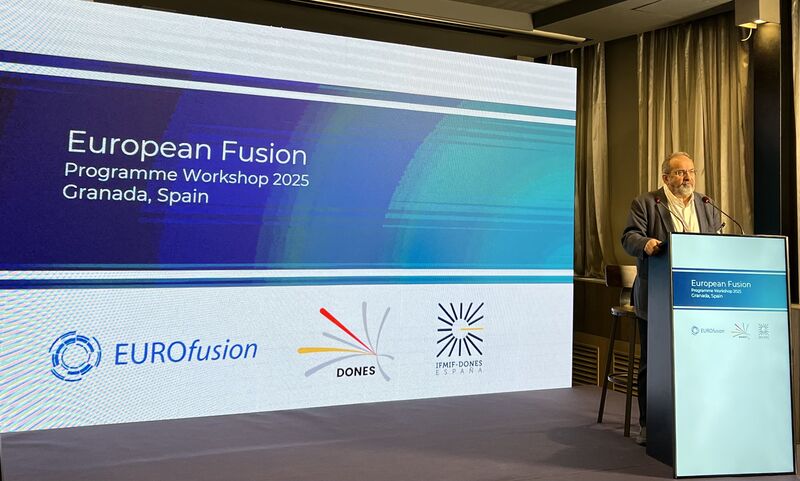
The workshop started with a welcome by Director of the IFMIF-DONES España Consortium Angel Ibarra Sanchez. Image credit: IFMIF-DONES

From 28 to 30 January, our group leader Mervi Mantsinen attended the 32nd European Fusion Programme Workshop in Granada, Spain. More than a hundred experts in fusion physics and technology took part and shared their progress and visions within the European Fusion Programme.

This year’s theme was “Nuclear Engineering and Physics for Fusion Power Plants”, and key topics included “Materials Testing”, “Fuel Cycle and Shelter”, “Fusion Reactor Life Cycle and Safety” and “Towards Fusion Power Plants”. Participants also had the opportunity to visit the University of Granada-DONES Research Centre in Escúzar, Granada.

Read more

digilab and Next Step Fusion visit BSC Fusion

Nuclear fusion is going from strength to strength, with several technological breakthroughs in recent years, including the ability to build high-temperature superconducting (HTS) magnets that can generate high magnetic fields with almost no energy loss. This is important not only because it increases the obvious net energy production, but also because it may be possible to build more compact magnetic fusion devices such as tokamaks and stellarators. The dimensions of these machines are much smaller than those of ITER, and this has attracted the attention of industry in a variety of ways, from larger and more experienced companies focused on manufacturing, to a proliferation of start-ups focused on novel reactor designs and software modelling.

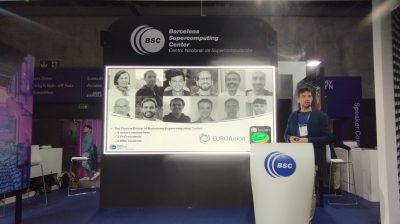
Part of the industry is developing artificial intelligence (AI) solutions to fusion problems. Two of these companies, digilab and Next Step Fusion, have recently visited the Fusion Group at the Barcelona Supercomputing Center headquarters.

Read more

Our Participation in the Spanish National Fusion Strategy

National Strategy Planning meeting

On 14 October, the Spanish National Fusion Strategy Planning Meeting was held at the CDTI headquarters in Madrid. The meeting brought together most of the fusion stakeholders in the Spanish fusion ecosystem, from research institutions such as CIEMAT or BSC to companies in the fusion sector. With all the relevant advances in fusion that have accelerated the path towards its commercialisation, many countries are either reviewing or creating their own strategy. This was therefore a very timely meeting to define the role that Spain intends to play in the near future, at a time when private investors and industry are closer than ever to fusion.

Read more

BSC hosts the annual EUROfusion HPC ACHs meeting

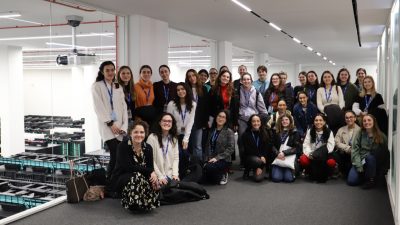
From 27 to 28 November, our Fusion Group had the honor of hosting the 2nd Annual Meeting of the EUROfusion HPC Advanced Computing Hubs (ACHs) at Barcelona Supercomputing Center (BSC), Spain. After a successful virtual first meeting, this event marked a significant return to in-person collaboration, bringing together around 29 researchers, 26 attending in person and 3 connecting virtually, from the five Hub centers: BSC-CIEMAT (Spain), EPFL (Switzerland), IPPLM (Poland), IPP Garching (Germany), and VTT (Finland).

Read more