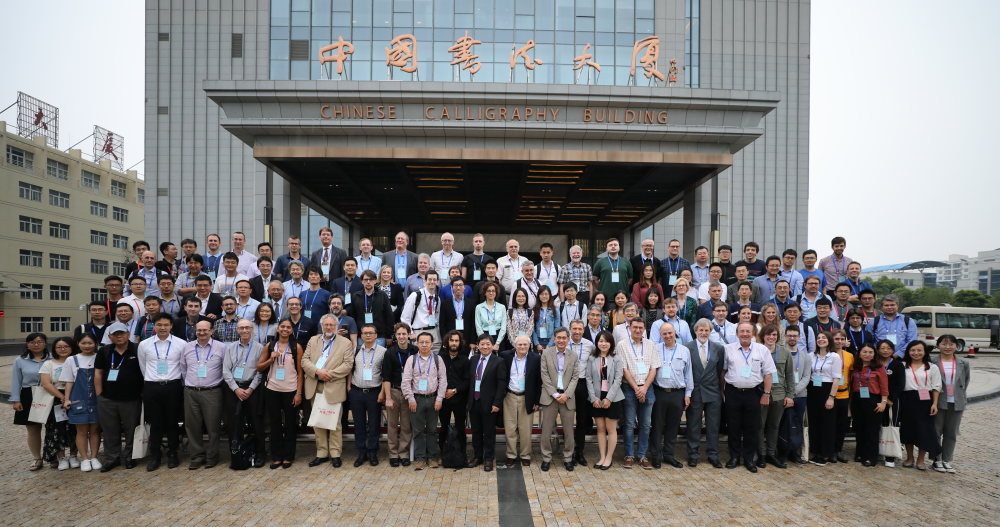
2019 Radio Frequency Power in Plasmas Conference participants.
Many colleagues from the radio-frequency power in plasmas (RFPP) community travelled to Hefei (China) last week (14th to 17th May) in order to attend the 23rd edition of the RFPP Conference. This conference tackles several aspects, from the engineering design of new antennas to the physics of the waves propagating inside a fusion plasma.
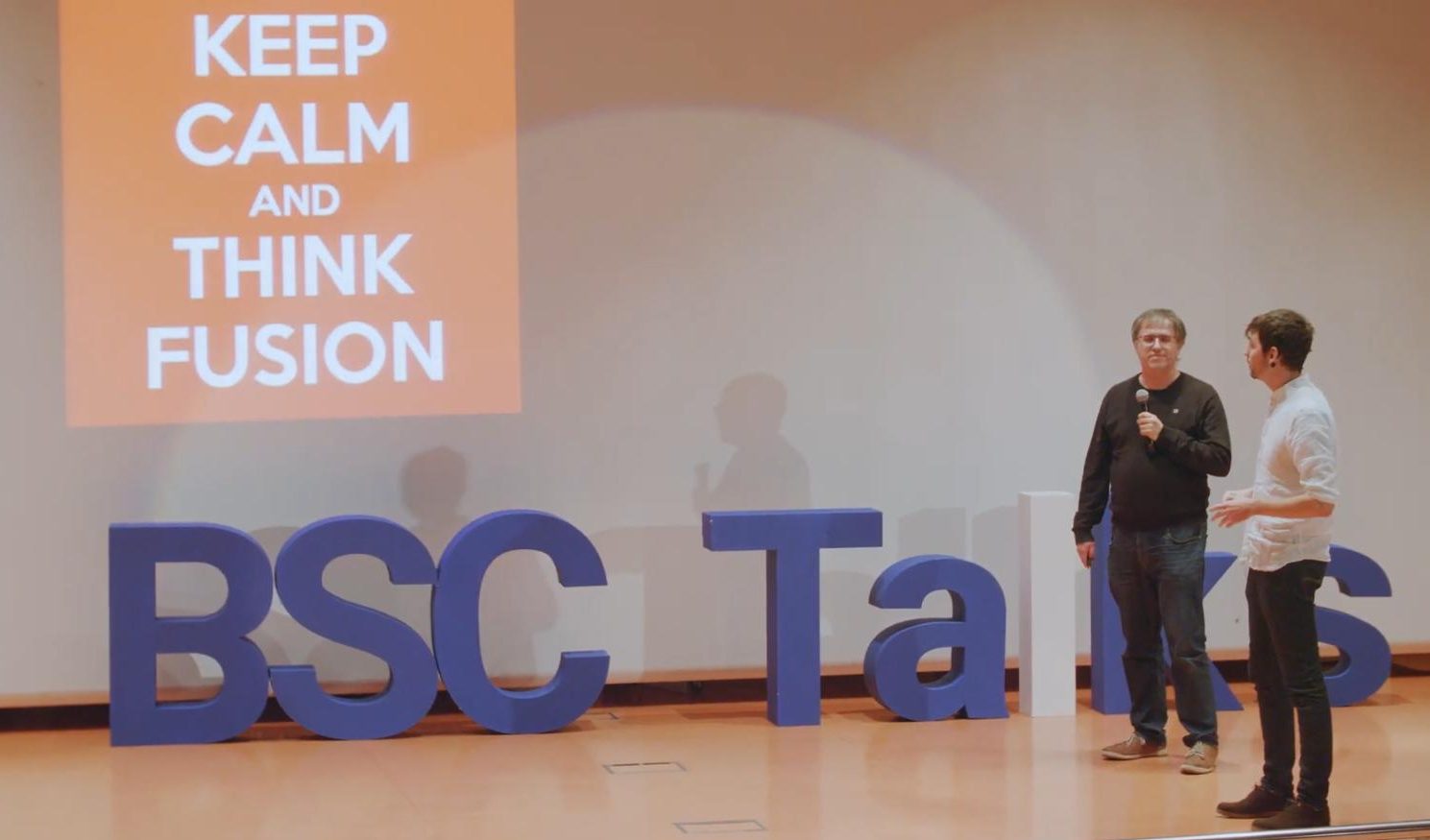
Earlier this week, BSC has posted in its YouTube account the talk given by our researchers, Dani Gallart and Xavier Sáez, in the last BSC Annual Meeting.
One of the most expected activities of the Annual Meeting was the “BSC talks” that promotes the internal knowledge about the work done at BSC. The “BSC Talks” section aims to be a showcase for BSC researchers presenting the work developed in their group to the rest of colleagues of the research center in the form of brief presentations of 10 minutes.
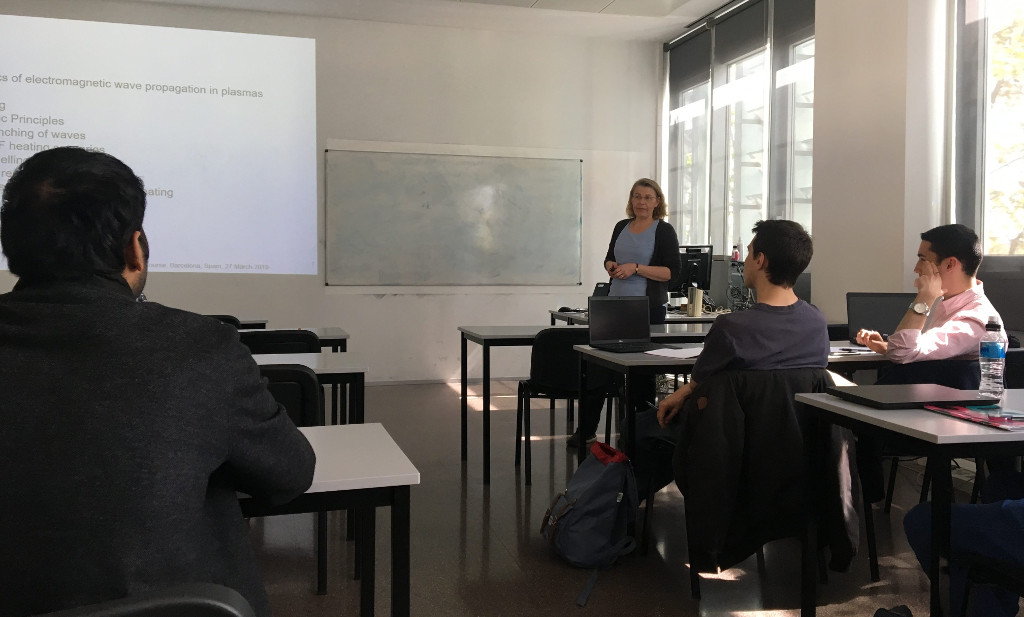
This course is designed to offer the students an overview on selected key topics in Fusion Technology, delivered by specialist lecturers from F4E, UPC and our Fusion group at Barcelona Supercomputing Center (BSC). The course is coordinated by Dr Shimpei Futatani who moved from our Fusion group to UPC last year.
The Joint European Torus (JET) is getting ready for a new campaign with deuterium (D) fuel mixture at the Culham Centre for Fusion Energy (CCFE), UK. After this D campaign, a tritium (T) campaign is planned to follow. These campaigns are made in preparation for the eventual D-T campaign with a fusion reactor relevant 50%-50% D-T fuel mixture. It will be the second D-T campaign at JET; the first D-T campaign at JET was carried out in 1997. The production and physics of born alphas (He-4) at 3.5MeV due to D-T fusion reactions will be tested and assessed with the ITER-like-wall made of beryllium (Be) and tungsten (W).
As high-performance discharges are sought, the control of high-Z impurity transport will play a key role during this campaign. One of the main goals is to keep the impurity accumulation at the plasma core low. In this regard, large efforts have been carried out by the experimental and modelling team during the preparation of these campaigns.
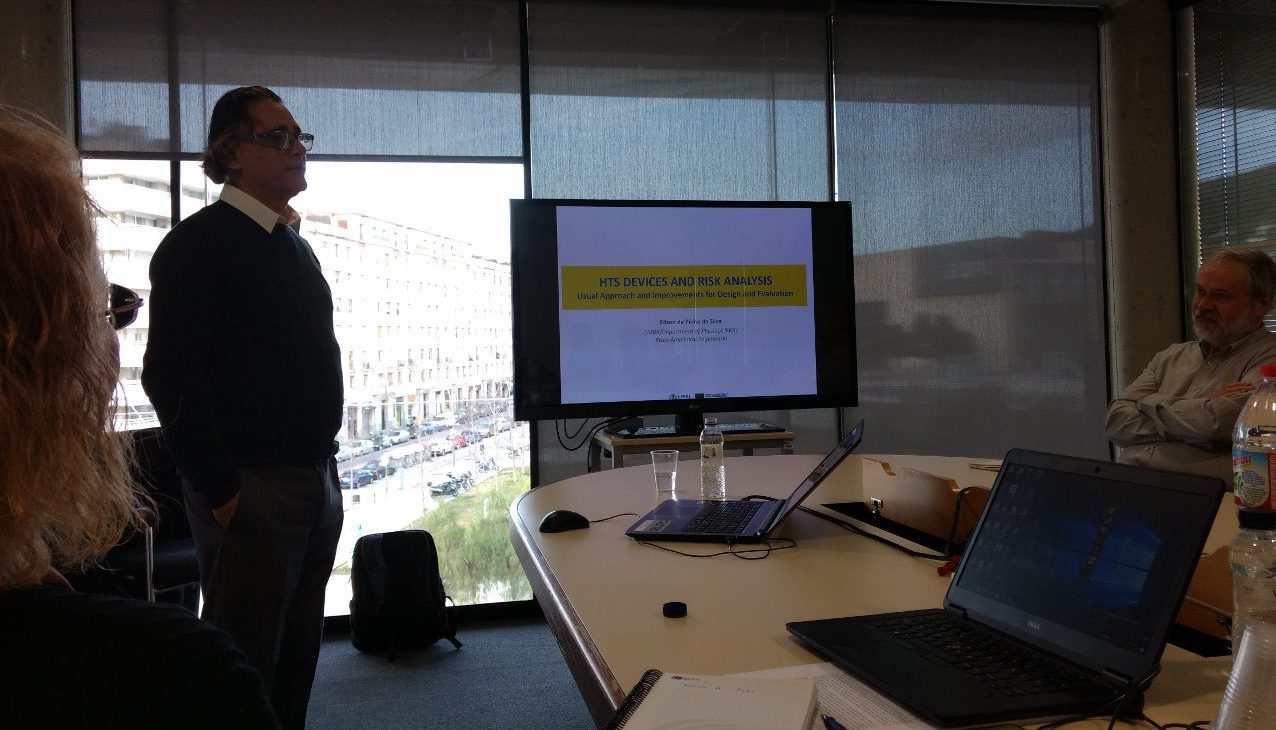
Professor de Pinho gave a talk entitled “High temperature superconducting devices and risk analysis: usual approach and improvements for design and evaluation” in which he presented some of the activities carried out by the UFRRJ Laboratory of Superconducting Materials and Devices (LMDS).
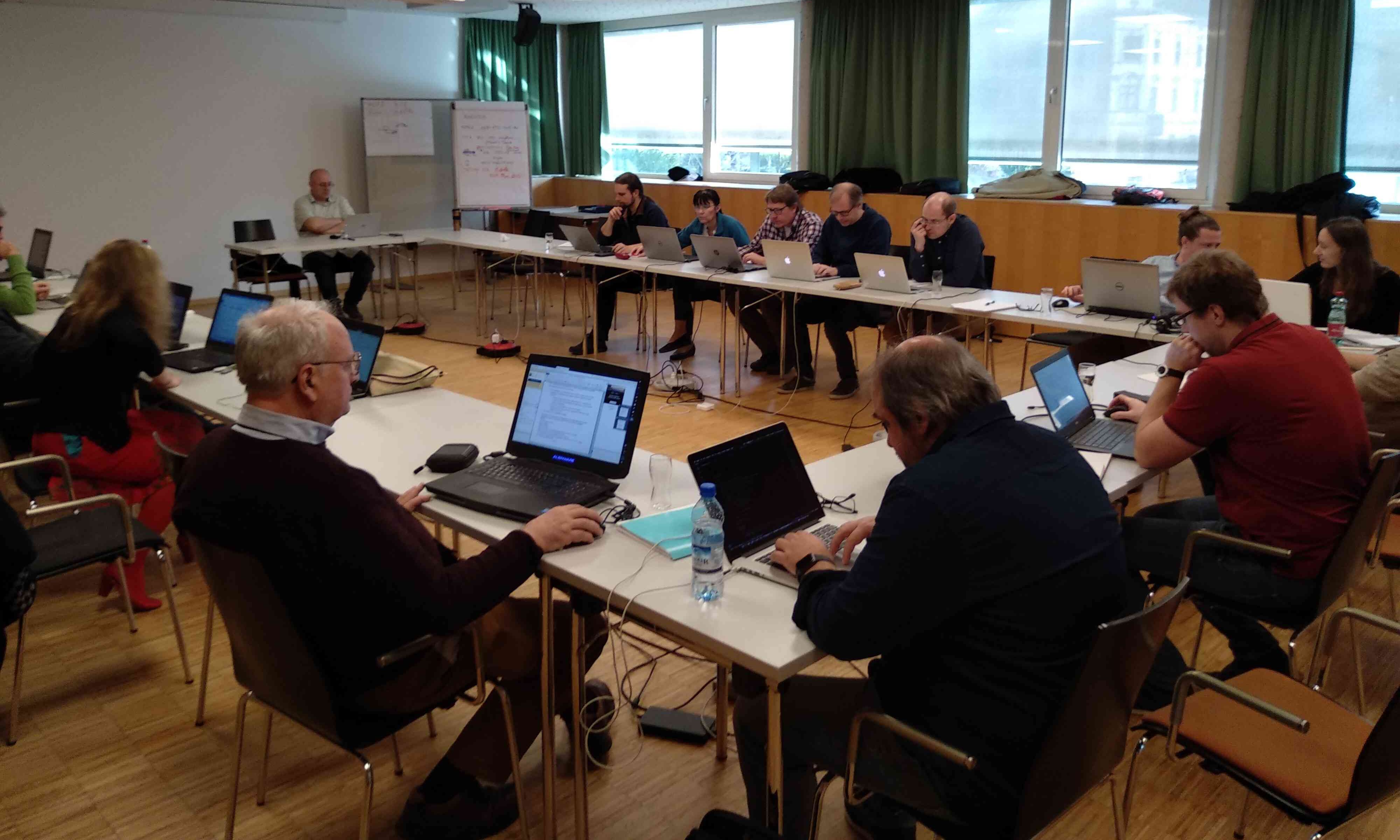
This week, WPCD developers from all around EUROfusion countries have met at Innsbruck, Austria, in the last WPCD code camp of 2018. 37 participants have been working on various activities, all of them aligned towards the European integrated modelling efforts. Discussions have been carried out in the integration of codes within the IMAS (Integrated Modelling & Analysis Suite) ant ITM aiming to bring together codes from fusion research centers.