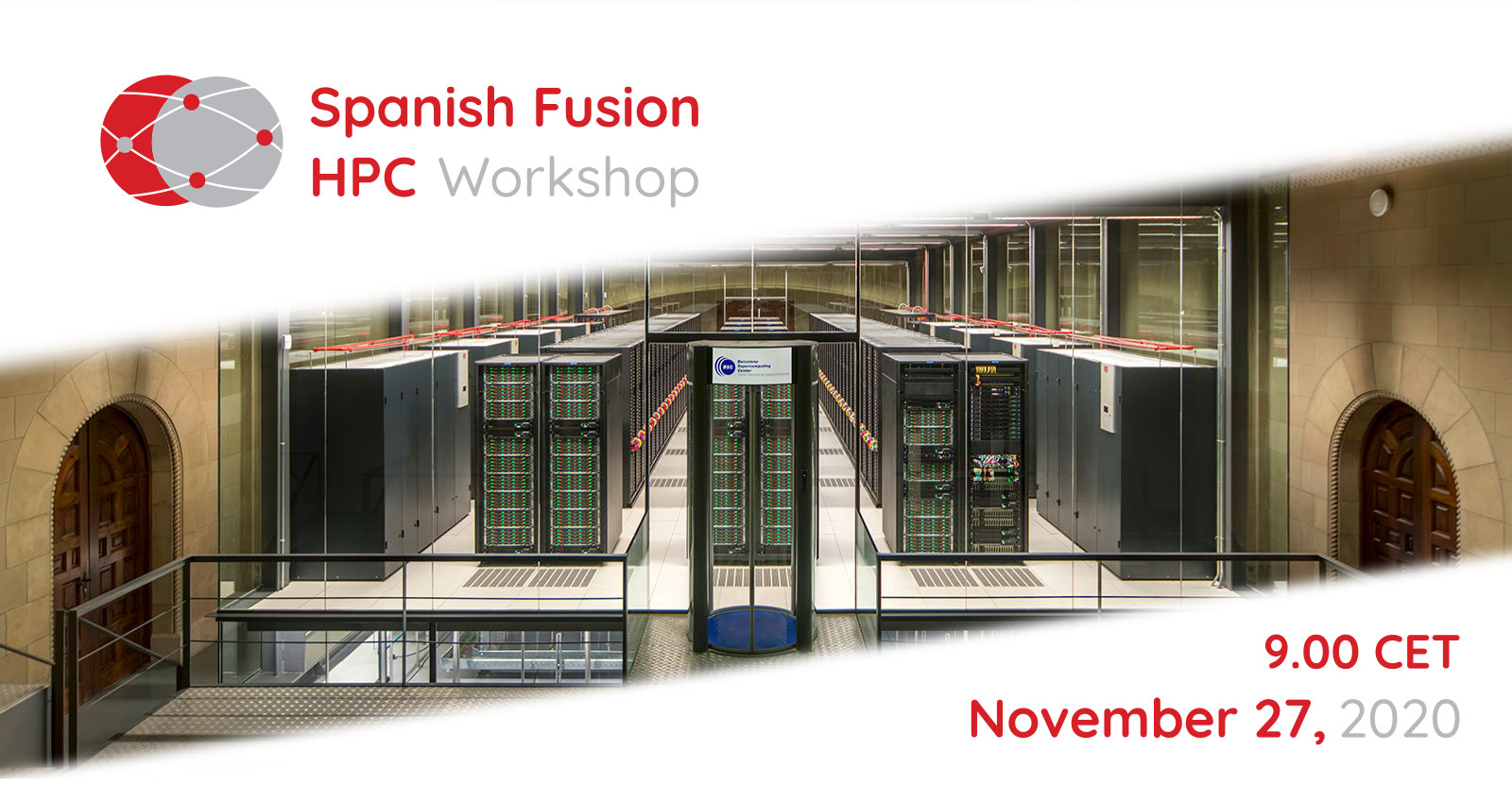
It is our pleasure to organize the 1st Spanish Fusion HPC Workshop as an online event with Zoom on 27 November 2020. The workshop covers all computer applications using High Performance Supercomputing (HPC) in the field of fusion research. These include, but are not limited to, numerical simulations in the following areas:
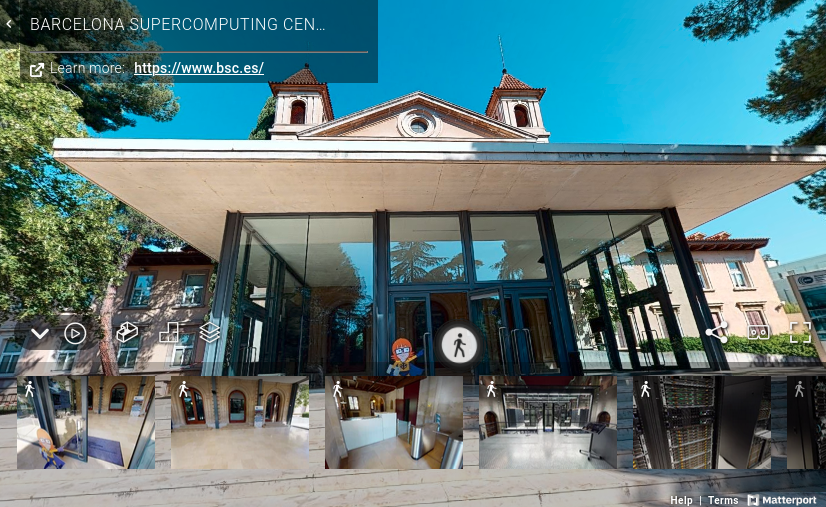
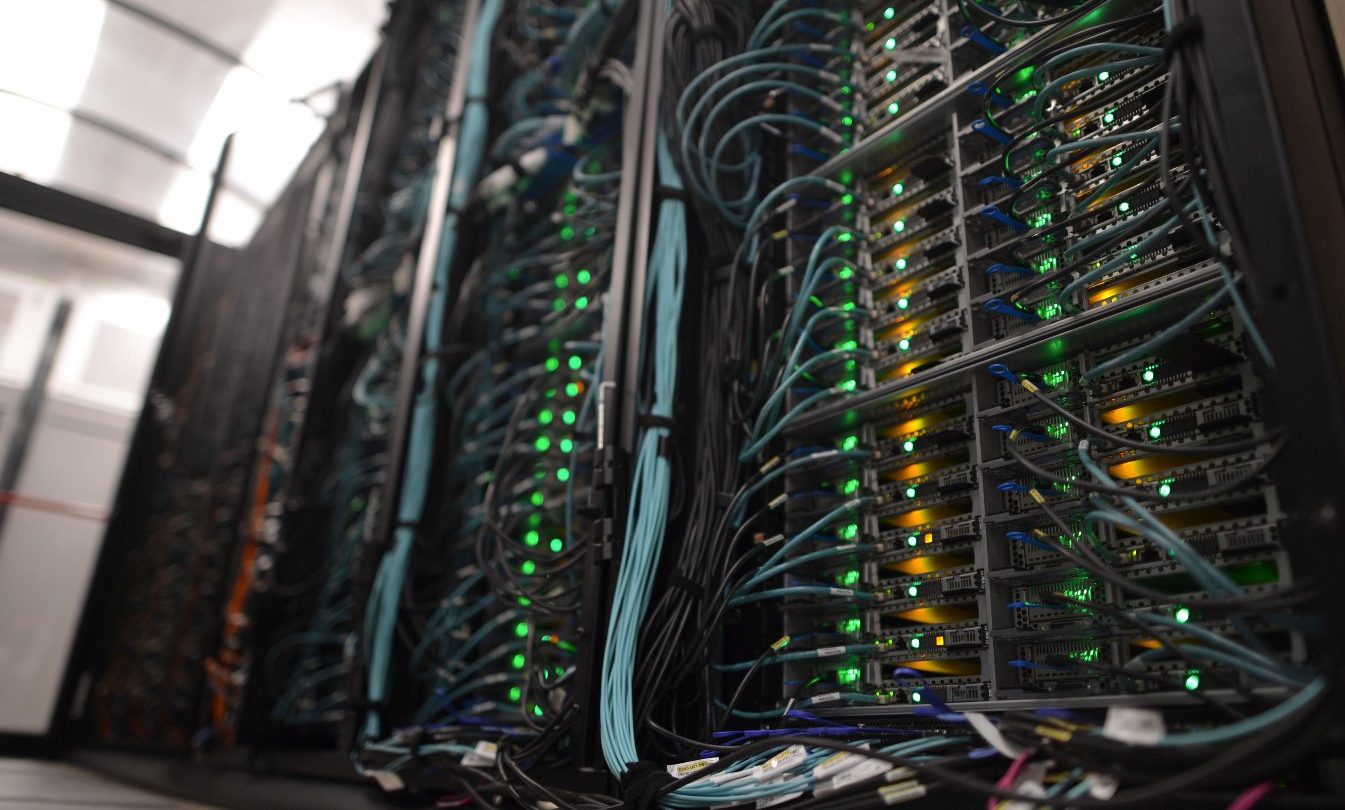
The Barcelona Supercomputer Center has enabled a virtual tour of the MareNostrum 4 supercomputer. This tour allows to discover one of the most powerful supercomputers in Europe located in the beautiful chapel of Torre Girona. The chapel maintains ornamental elements such as stained glass and religious images that can be appreciated in the online visit. Moreover, the tour gives access to parts restricted to the public such as the inside of the supercomputer cage.
It has been 4 months since the beginning of the confinement. Barcelona was stricken by the CoVid-19 as was the rest of the world. Fortunately, things are getting better and Barcelona ended the confinement the 21st of June together with the rest of Spain. It has been a difficult time for many who have seen their lifestyle seriously affected and their jobs frozen or even worse, cancelled. We still do not know what the economical magnitude of this situation will be or how the world is planning to recover from this.
However, the Fusion Group feels deeply privileged as our work has not been cancelled nor stopped at any point. We have been and are working remotely (from home), following the recommendations of the government. The main European fusion projects under EUROfusion we are working with, JET and AUG, have recently resumed their experimental activities and the modelling efforts have been increased during the confinement. Furthermore, in order to cover all the projects where the Fusion Group is involved, two new researchers have been recruited: Dr. Francisco Fernández and Dr. Julio Gutiérrez. They will work within the Ris3Cat FusionCAT project.
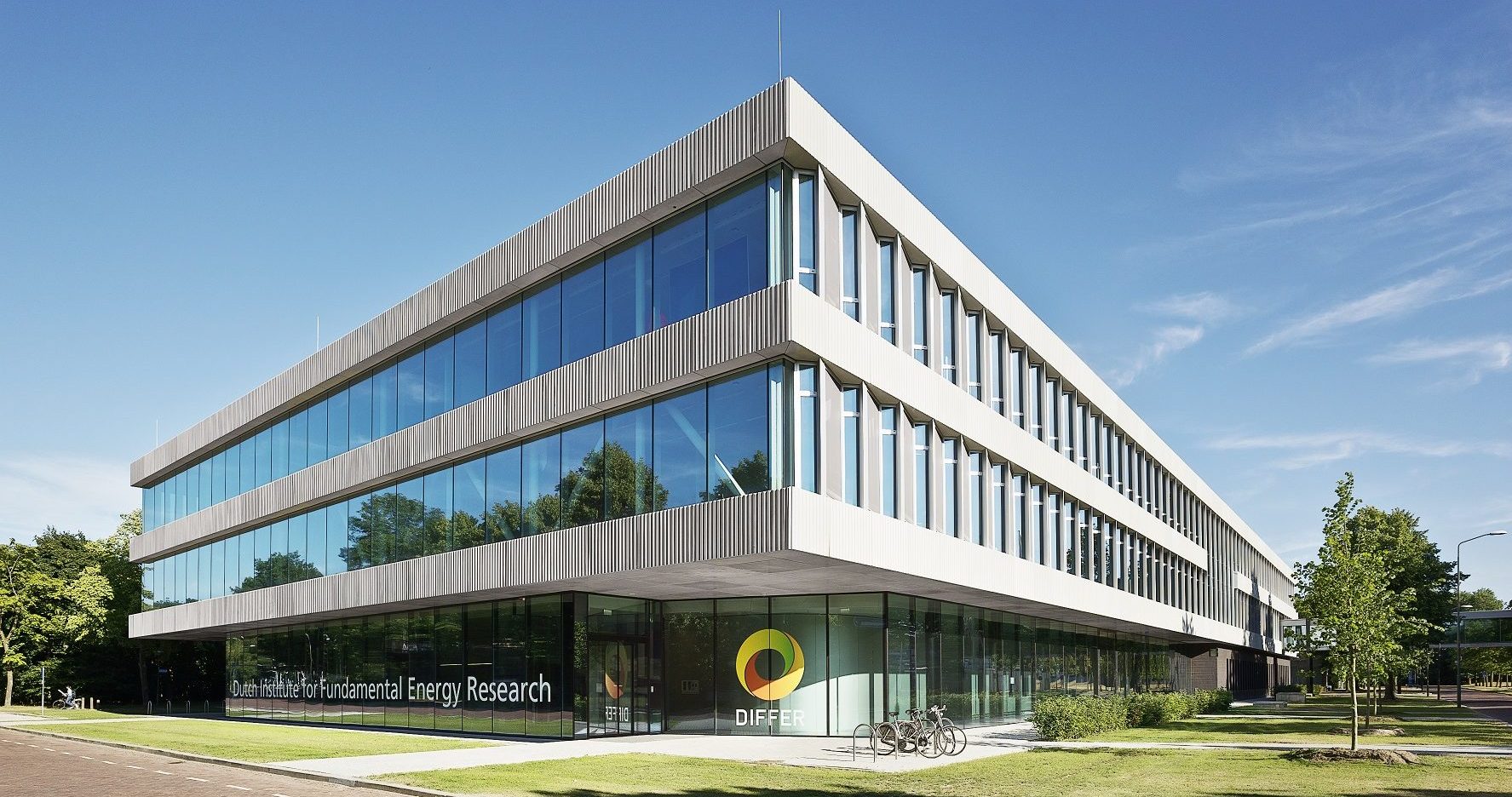
DIFFER (Dutch Institute for Fundamental Energy Research) building. Source differ.nl
The EUROfusionWork Package Code Development (WPCD) Summer Code Camp, scheduled to be hosted by DIFFER (Dutch Institute for Fundamental Energy Research) in Eindhoven, Netherlands, went finally online due to the COVID-19 crisis during the two weeks from the 8th to 19th June, 2020. The first week of the Code Camp was focused on the Enabling Workflow Exploitation (EWE) programme while during the second week, several working sessions were organized, among others, about the adaptation of workflows in ITERIntegrated Modelling & Analysis Suite (IMAS).
The webinar will aim at giving teachers the tools and knowledge they need in order to introduce fusion in the classrooms. Such state-of-the-art concepts can certainly be hard to introduce into schools, thus we truly think this is a fantastic opportunity to learn how to do it.
M100 became available in May 2020 to the European public and industrial researchers. In particular, the access to M100 is granted to users with approved projects for this platform (EUROfusion, PRACE, European HPC programs,…). EUROfusion community has 80 dedicated nodes of M100, which means a peak performance of 2.5 Pflops, to run fusion codes and boost the research in this field.
M100 opens the way to the pre-exascale Leonardo Supercomputer expected to be installed in 2021.