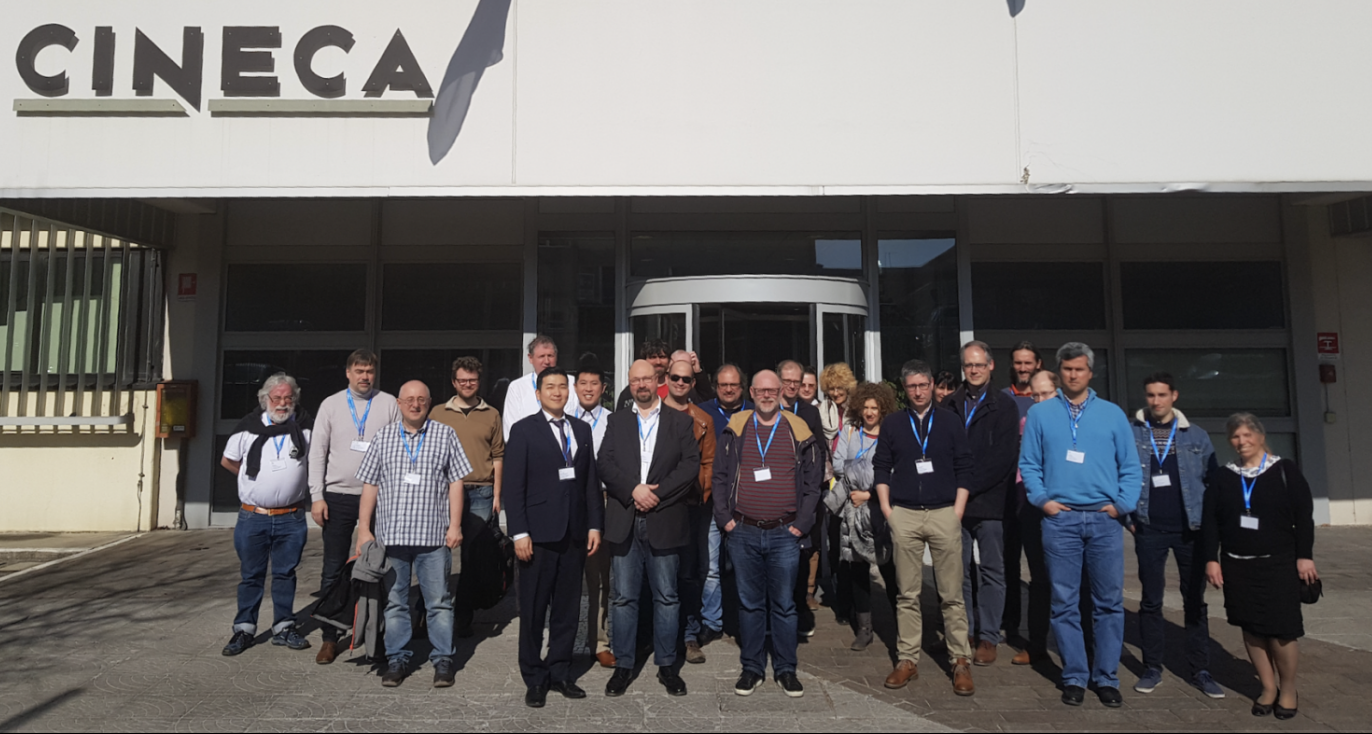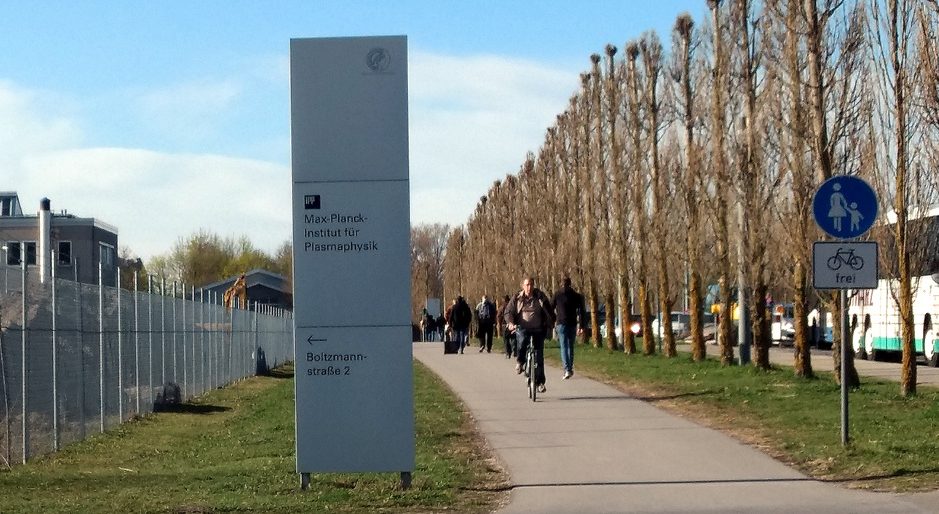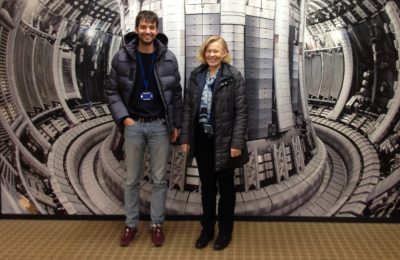
Our PhD student Allah Rakha is back at BSC after successfully completing a six-month research stay at the Max-Planck Institute for Plasma Physics (IPP), Germany. IPP is a leading institute in Europe for both theoretical and experimental studies of fusion plasmas, equipped with two state-of-the-art fusion experimental devices, the ASDEX Upgrade (AUG) tokamak and the world’s largest stellarator Wendelstein 7-X.
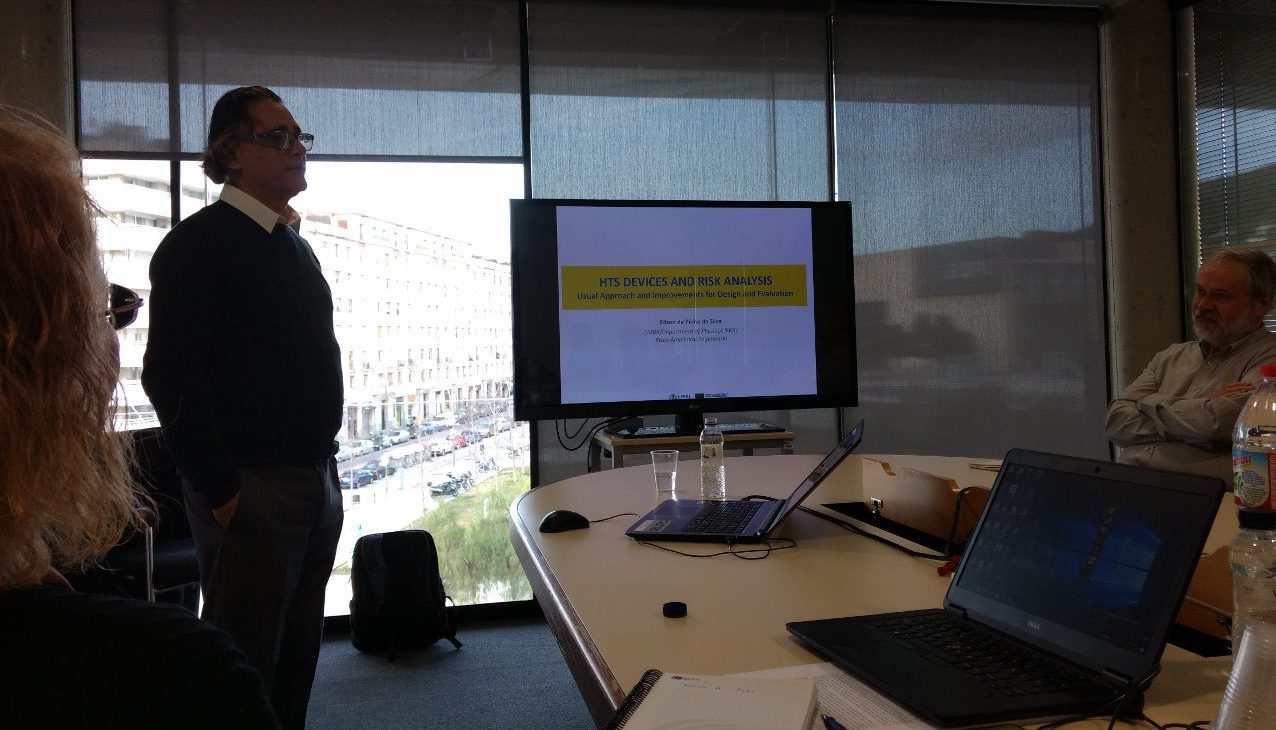
Professor de Pinho gave a talk entitled “High temperature superconducting devices and risk analysis: usual approach and improvements for design and evaluation” in which he presented some of the activities carried out by the UFRRJ Laboratory of Superconducting Materials and Devices (LMDS).
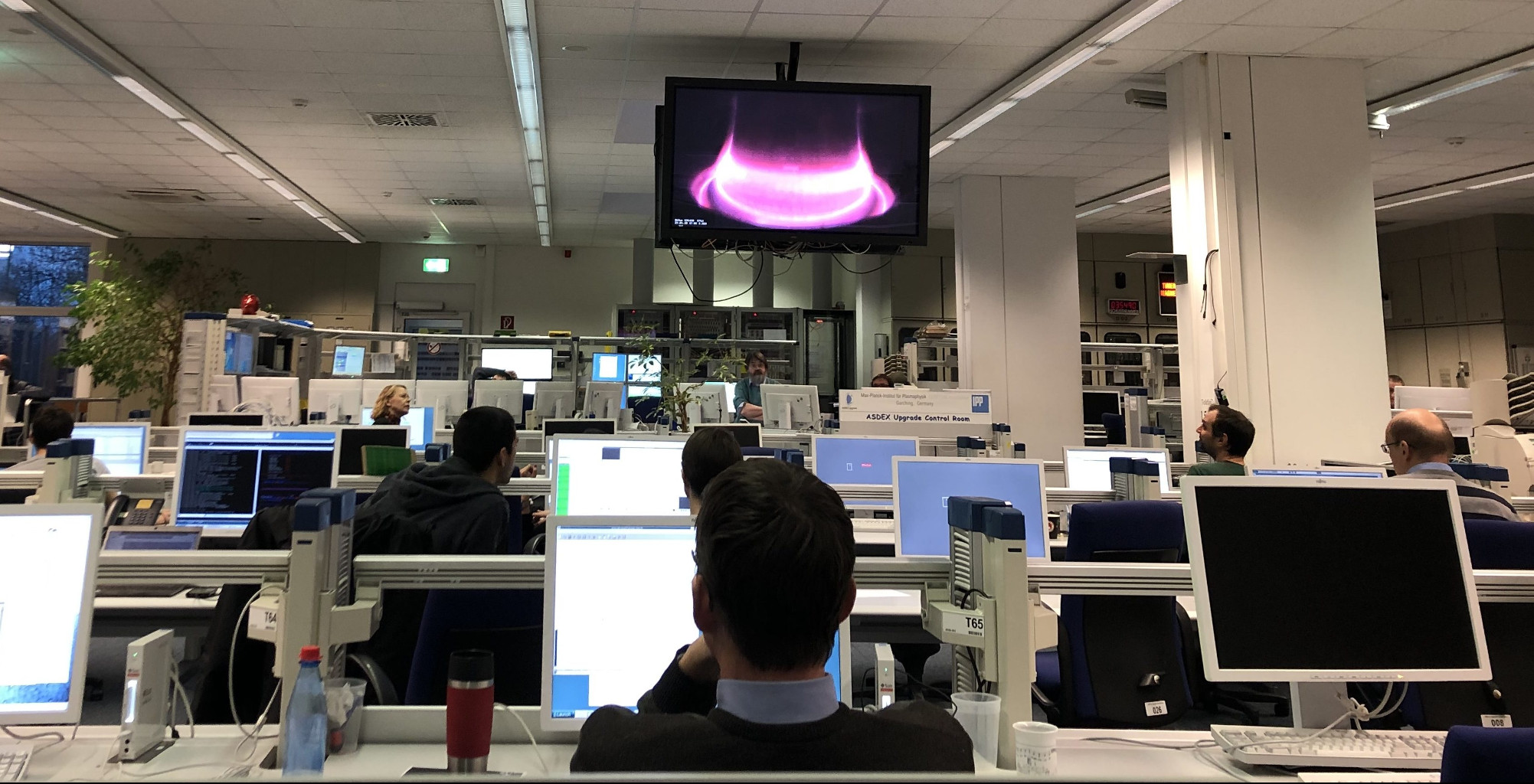
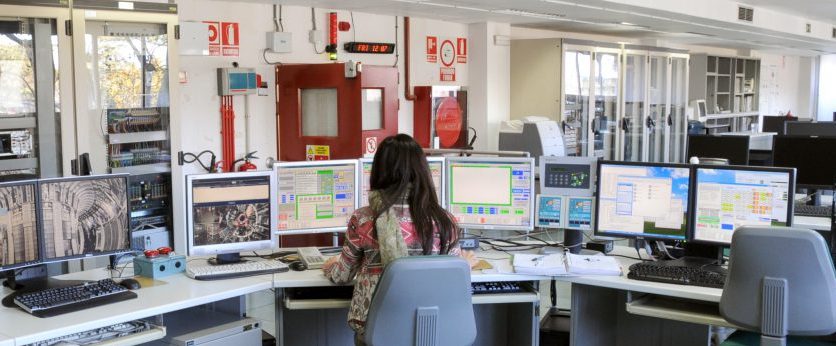
View from the AUG control room during last weeks experiments.
Our group leader Dr. Mervi Mantsinen and PhD student Dani Gallart worked last week at the Max-Planck Institute for Plasma Physics (IPP) at Garching, Germany. They participated in the experiments on the ASDEX Upgrade (AUG) tokamak as part of the EUROfusion 2018 Medium Size Tokamak (MST1) experimental campaign.
Mervi was the scientific coordinator of the experiments that successfully proved the use of waves tuned to the third harmonic ion cyclotron resonance of deuterium (D) to heat the plasma. Various diagnostics including neutron detectors and neutral particle analysers confirmed the presence of energetic D ions accelerated by resonant wave-particle interaction.
The Fusion Group at Barcelona Supercomputing Center (BSC) and the National Fusion Laboratory at CIEMAT (Centro de Investigaciones Energéticas, Medioambientales y Tecnológicas) have actively collaborated for more than ten years. Over the recent years, the collaboration has focused on the modelling of plasma instabilities in the CIEMAT-based TJ-II stellarator device. It has recently resulted in a publication in the Nuclear Fusion journal and a related follow-up project on the modelling of energetic particle behaviour in TJ-II plasmas.
On 20 January, Barcelona Supercomputing Center held the 2018 Annual Meeting in the UPC Vèrtex building Auditori (auditorium). In this event, Mateo Valero, BSC director, and Josep Martorell, BSC associate director, reviewed the achievements reached in 2018 and the expected projects in the future.
TJ-II stellarator at the Laboratorio Nacional de Fusión (LNF), CIEMAT, Madrid, Spain (Foto: http://www.fusion.ciemat.es)
Our journal article entitled “Modelling of beam-driven Alfvén modes in TJ-II plasmas” has been accepted for publication in Nuclear Fusion. Nuclear Fusion is one of the renowned journals in our field.
The paper reports on our modelling results aimed at understanding a certain type of energetic-particle-driven instabilities called Alfvén modes in TJ-II stellarator plasmas and their comparisons with experimental results. In particular, we have modelled Alfvén eigenmodes in TJ-II discharges with a dynamically changing magnetic configuration when both steady and chirping modes are observed. The modelled mode frequencies and radial locations are found to be consistent with the experimental findings. We also have drawn important conclusions on the properties of the energetic particles that are resonant with the modes.