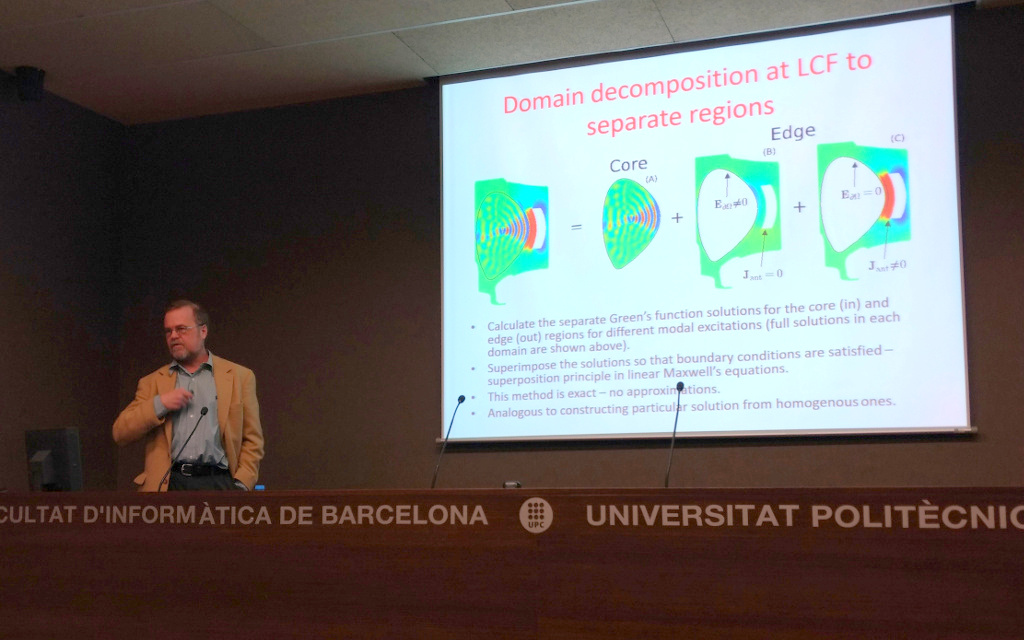
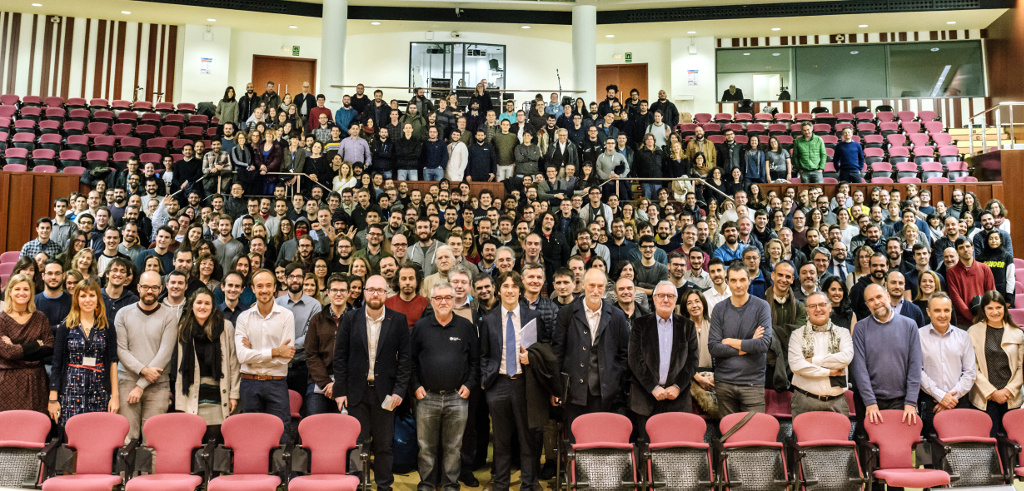
Dr John Wright, Principal Scientist at Plasma Science and Fusion Center at MIT (USA) visited the BSC fusion group for two weeks in March, funded by BSC Severo Ochoa incoming mobility funding. The objective of his visit was to install the All-Orders Spectral Algorithm (AORSA) code at MareNostrum.
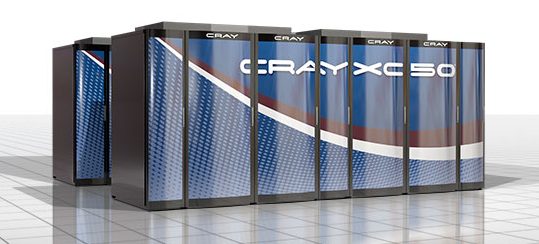
The National Institutes for Quantum and Radiological Science and Technology (QST) of Japan has selecteda Cray XC50™ supercomputer to be its new flagship supercomputing system. The yet unnamed supercomputer will be the replace for the Bullx cluster known as Helios.
The Fusion Group at Barcelona Supercomputing Center (BSC) is looking for an internship student with a degree in physics or computer science. The successful candidate will become an active member of the group. The group is a multidisciplinary team that includes mathematicians, physicists and computer scientists. The research project will be decided based on the research interests of the successful candidate and the needs of the projects.
Whether the nuclear fusion approach is based upon magnetically confined plasmas or inertial confinement, the underlying idea is the same, to fuse nuclei made up of protons and neutrons into a more massive nucleus. But what if there exists other physical mechanisms?
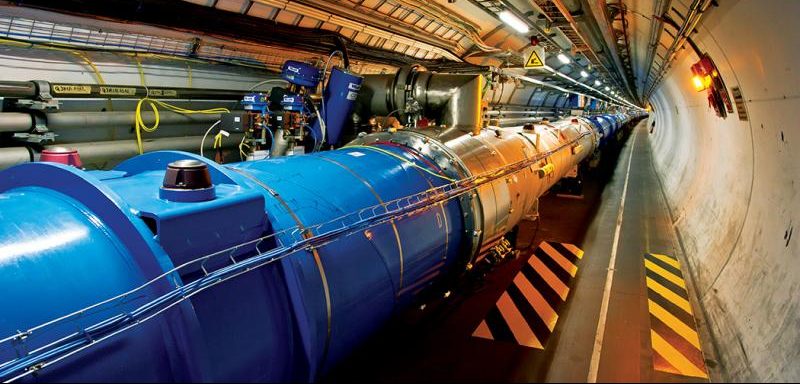
A recent paper published in Nature by Marek Karliner and Jonathan L. Rosner describes the fusion reaction at a quark-level by the double charmed baryon discovered at CERN, Geneva. CERN hosts the Large Hadron Collider (LHC) which is the world’s largest and most powerful particle collider which intends to discover the fundamental structure of the universe.
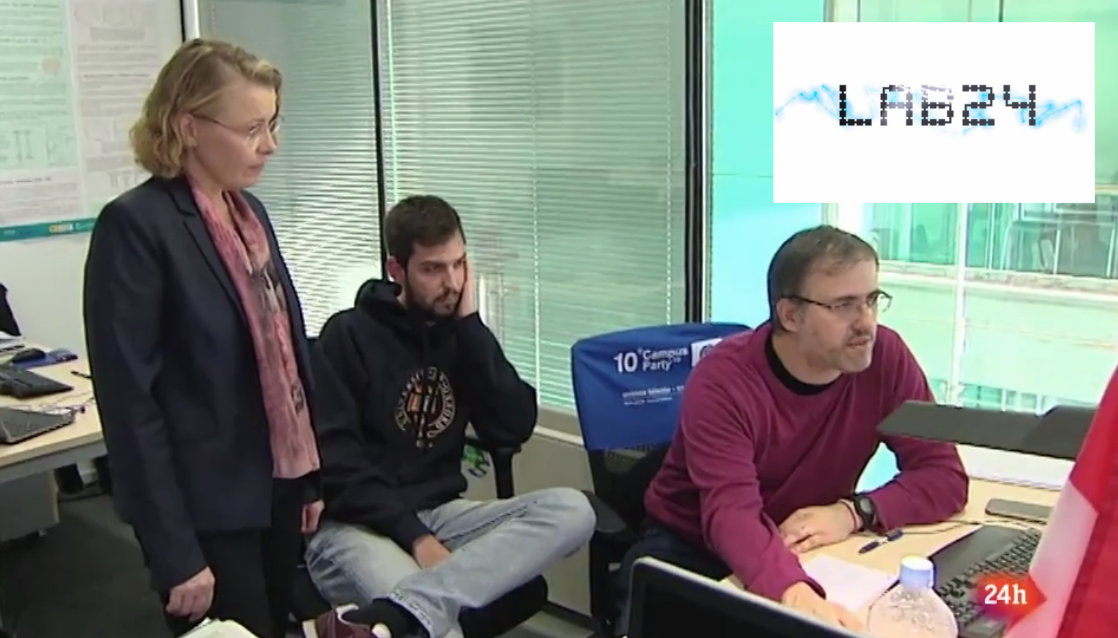
On 14th February, our research group appeared in the Spanish LAB24 TV program as an example of applying the new MareNostrum supercomputer to advance science.
LAB24 is a TV program of the News area of Televisión Española (TVE) produced at the studios in Sant Cugat del Vallès, near Barcelona, and presented by Pere Buhigas.
CIEMAT Fusion Group next to TJ-II in 1997. (Photo: E. Poveda)
CIEMAT’s TJ-II Fusion experiment have completed twenty years of operation from the first high temperature plasmas that were achieved in December in 1997.
During those twenty years, the TJ-II device has contributed successfully to science by incorporating a unique set of measurement and instrumentation systems for model validation and essential theory for confinement fusion plasma physics. As a result of this strategy, the results obtained from TJ-II have contributed to crucial subjects, such as physics of transporting impurities, control of instabilities generated by energetic particles, physics of self-organization in systems not in equilibrium, and coupling between neoclassical and turbulent transport mechanisms, which have led to publications in the most prestigious physics journals, such as “Physical Review Letters” and “Nuclear Fusion”.