#IAmAPhysicist

twitter1

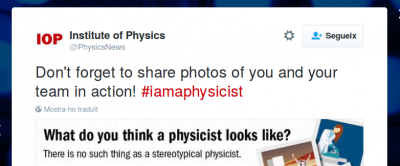
On Thursday, May 26th, the Institute of Physics (IOP) released a campaign on Twitter to break down the stereotype of what a physicist looks like.

The objective of the movement is to help the non-scientific community to better understand that there is no mainstream physicist, and that there is a wide range of jobs a physicist can do, from finance (econophysics) to healthcare (medical physics).

Read more

Way forward for the ITER Plant Simulator

plant_simulation_david_1

Present nuclear power plants make use of robust plant simulators capable of simulating the plant operation. In addition, these plant simulators are able to model possible accidents that could occur in a real situation. In this way operators can be instructed and acquire all the skills that they are going to need in the development of their job. Of course we are talking about “fission” nuclear power plants.

But what about “fusion” nuclear power plants?

Read more

Launch of National Spherical Torus Experiment Upgrade at Princeton

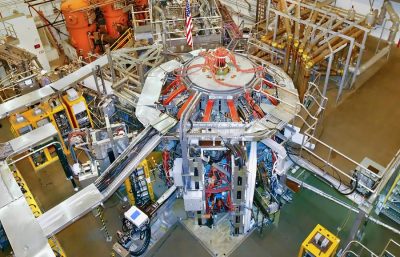
NSTX exterior.

Last Friday, 20 May 2016, was a historic day at the Princeton Plasma Physics Laboratory (PPPL).  It was a day that the $94-million upgrade to National Spherical Torus Experiment (NSTX-U), which took almost four years to build, was officially launched by the U.S. Department of Energy (DOE) Secretary Ernest Moniz.

Funded by the DOE Office of Science, NSTX-U addresses how to create fusion, the process that powers the Sun, on Earth, in a device based on the spherical tokamak concept.

Read more

Did you know this about plasma?

Ten things you may not know about the plasma:

  1. It’s the fourth state of matter: Solid, liquid, gas, and plasma. Plasma is a super-heated gas, so hot that its electrons get out of the atom’s orbit and roam free. A gas thus becomes a plasma when extreme heat causes its atoms to shed their electrons.
  2. It’s everywhere. Plasma is the most abundant form of visible matter in the universe – it is thought to make up 99 percent of what we see in the night sky. Plasma populates and dominates the vast regions of interstellar and interplanetary space.
  3. Stars, like the sun, are gigantic balls of plasma. And there are billions of them, so studying plasma can help us understand the cosmos.

    Read more