At the EUROfusion General Planning Meeting of Medium Sized Tokamaks

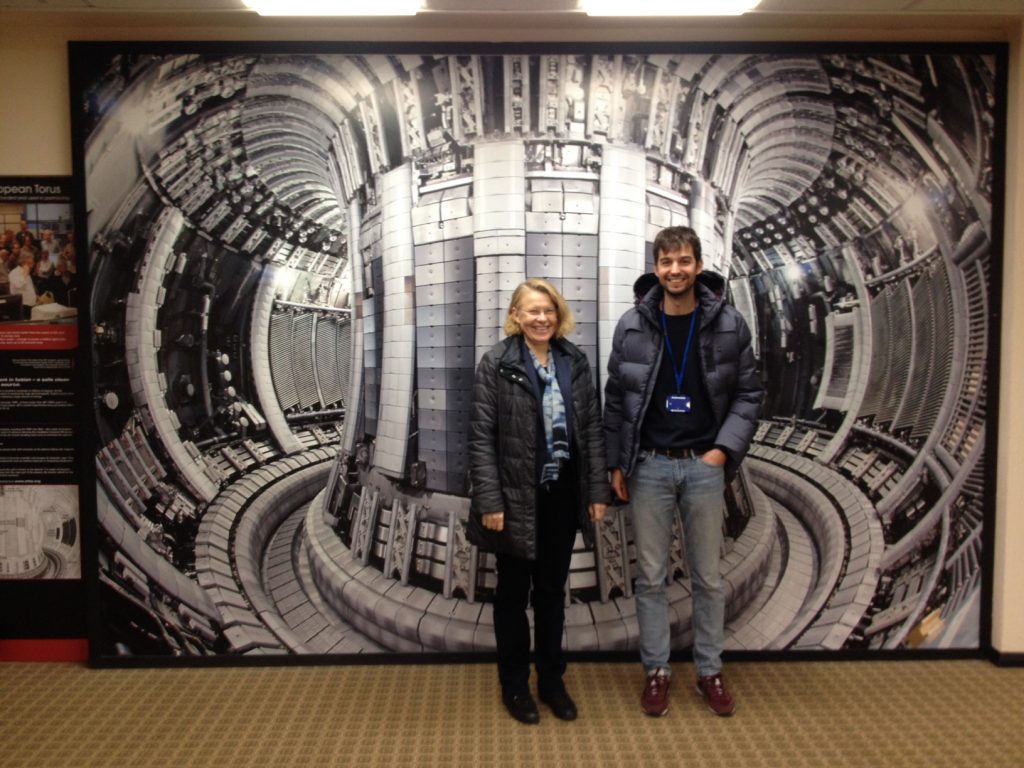
Dr. Mervi Mantsinen and Dani Gallart at the entrance hall of JET facilities at Culham, UK.

The General Planning Meeting (GPM) of the Medium Sized Tokamaks (MST1) was organized this year at at the JET facilities, Culham, UK. The meeting started with an overview of the present status of AUG (Garching, Germany) and TCV (Lausanne, Switzerland) tokamaks. They were followed by a presentation on MAST-U (Culham, UK) which will be back in operation next year with the new and exciting Super-X divertor. It will be able to drastically reduce the divertor heat load from particles leaving the plasma.

Read more

Tokamak Energy, a private fusion venture

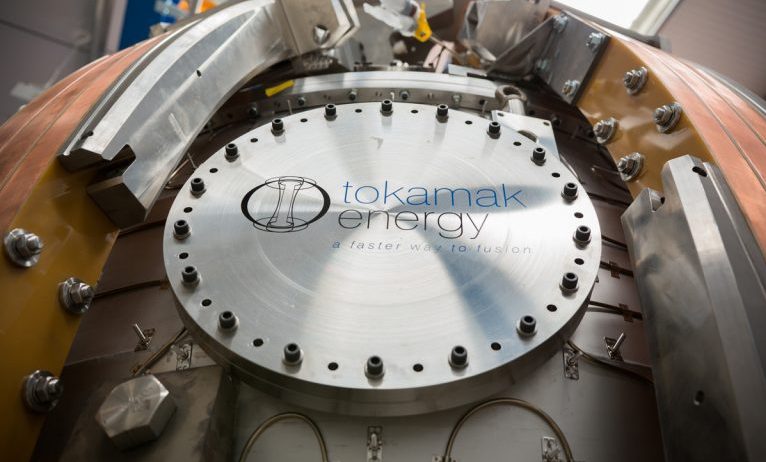
Tokamak Energy is a privately-funded company grown out of Culham Centre for Fusion Energy (CCFE), UK, in 2009 to design and develop small spherical tokamaks to produce neutrons for a range of scientific applications. Currently, it embarks on the quest for a compact solution for fusion providing energy into the grid by 2030.

Tokamak Energy collaborates with Princeton Plasma Physics Laboratory (PPPL), Imperial College of London, University of Oxford and University of Tokyo, amongst other institutions. As a private venture, its developments are covered by over 20 families of patent applications.

Read more

Spanish company will assemble the ITER vacuum vessel

ENSA plant located in Maliaño (Cantabria). Photo: ENSA

The international ITER project, whose objective is to demonstrate the viability of nuclear fusion as a source of energy, has chosen to use Spanish technology for the assembly of its vacuum vessel. The different vacuum vessel components will be assembled at the ITER site in Caradache (France) by the Spanish company Equipos Nucleares (ENSA).

Read more

Google enters in the fusion research

Machine-learning researchers at Google Research have developed in collaboration with researchers at Tri Alpha Energy a new computer algorithm which has significantly speeded up the optimization of its C-2U plasma generator.

On 25 July, the researchers published a report in the journal Scientific Reports describing the “Optometrist Algorithm” , a machine-learning tool that aids in choosing parameters to hold hotter nuclear plasma for longer periods in fusion experiments, one of the keys to cracking the complex code of nuclear fusion.

Read more