Fusion in our energy future according to TV series El dia de demà

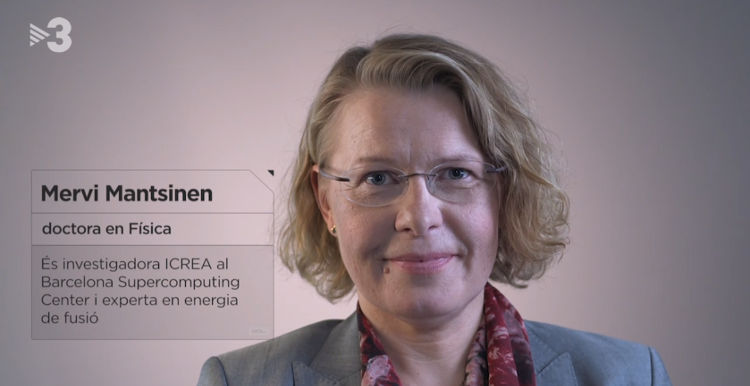
On Monday 26th June, the Catalan TV Channel 33 interviewed our group leader Prof. Mervi Mantsinen regarding to the prospects of fusion energy and its potential impact on society.

The programme was a part of the documentary series El dia de demà which investigates and discusses many possible future scenarios through the point of view of experts. The topics treated in the various programmes of the series are various, ranging from education to energy sources.

Read more

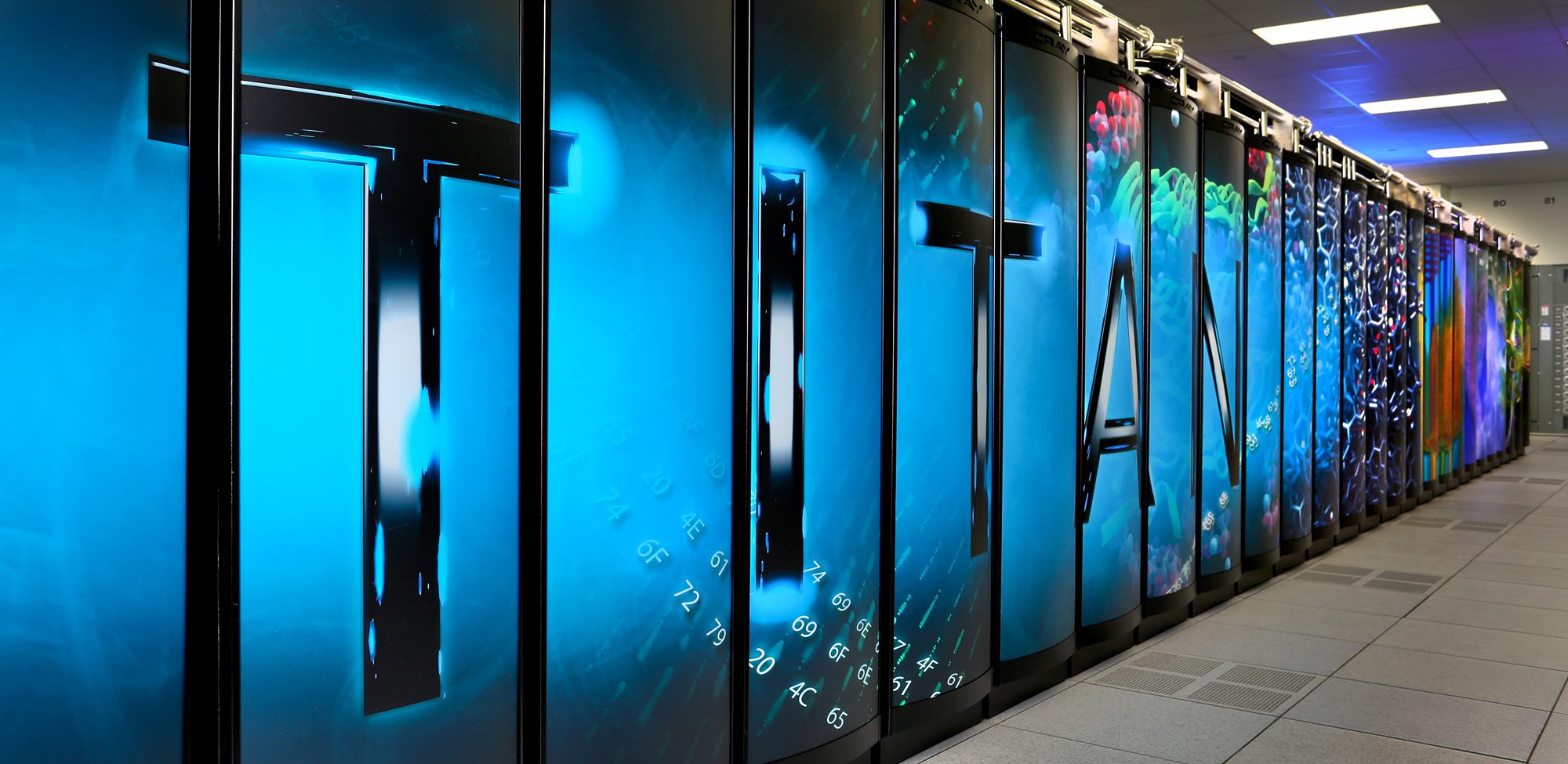
First first-principles-based simulation of a transition to high-confinement fusion plasma on Titan supercomputer

Simulation was performed on the Titan supercomputer. Source: Oak Ridge Leadership Computing Facility.

For the first time, scientists have been able to simulate the spontaneous transition of turbulence at the edge of a fusion plasma to the high-confinement mode (H-mode) that sustains fusion reactions. The detailed simulation is the first basic physics, or first-principles-based, modeling with few simplifying assumptions.

Read more

Fusion Group participates in PRACEdays17 and wins the best poster award

Felipe Nathan de Oliveira receives the PRACE Best Poster award.

From May the 15th to the 18th, the Barcelona Supercomputing Center held the European HPC Summit Week 2017 and the PRACEdays17, an event focused on the usage of High Performance Computing in the industry and the academia.

We are particularly pleased to report that our Master student Felipe Nathan de Oliveira won the PRACE award for the best poster. His work entitled “Nonlinear electromagnetic stabilization of ITG micro-turbulence by ICRF-driven fast ions in ASDEX Upgrade” was short-listed for the presentation on May the 16th with other two candidates.

Read more

BSC Fusion group improves the performance of fusion codes for EUROfusion

On 20 April 2017, our Fusion group researcher Xavier Sáez visited the Max-Planck-Institut für Plasmaphysik, Garching, Germany, to participate in the bi-annual meeting of the EUROfusion High Level Support Team (HLST).

Xavier presented the work developed in the group to improve the performance of SFINCS and FELTOR codes. SFINCS is a novel drift-kinetic solver which can be used to predict neoclassical flows in 3D magnetic configurations while FELTOR solves 3D full-F gyrofluid model equations with discontinuous Galerkin method.

Read more